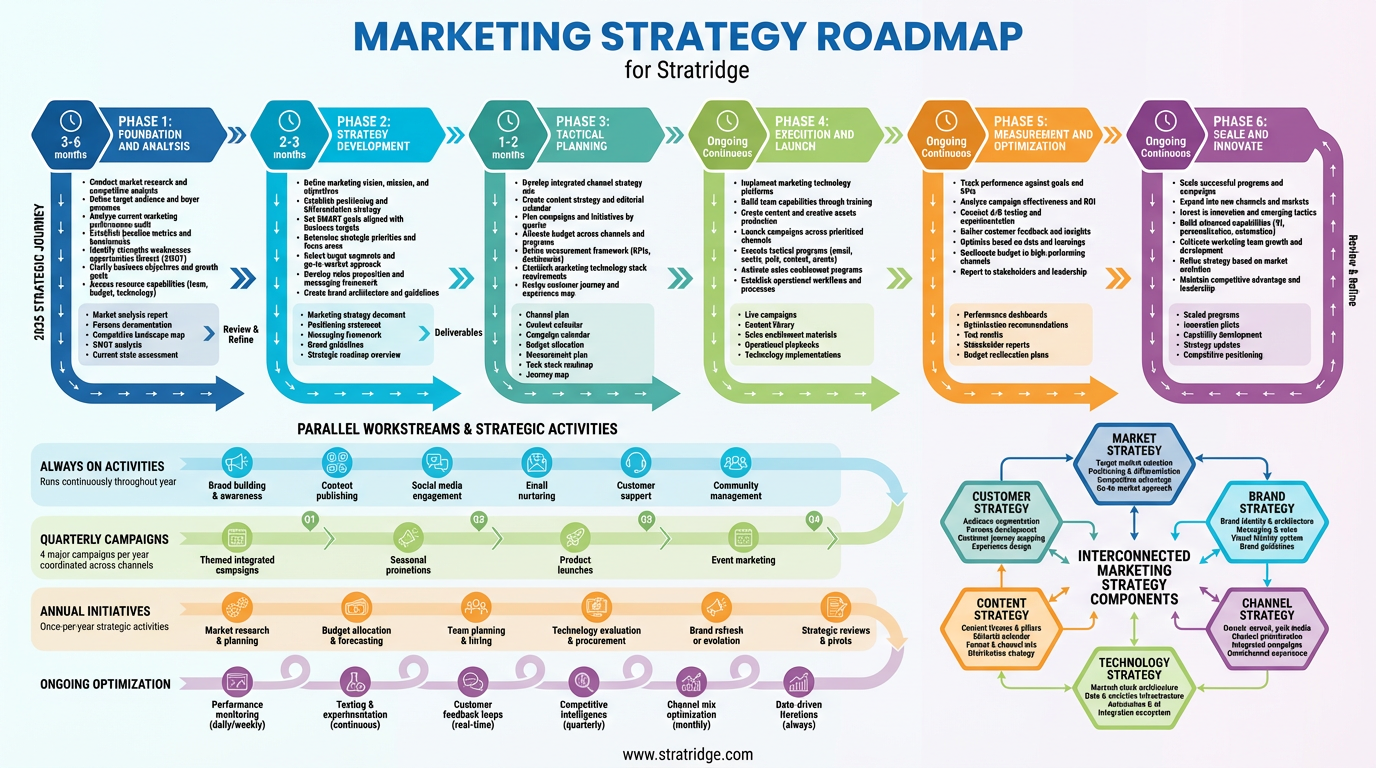
Every year, marketing leaders pour countless hours into crafting an annual strategy document, only to see it gather dust in a shared drive. The real challenge isn't just writing a strategy; it's writing one that actively guides decisions, inspires action, and becomes a living blueprint for growth, rather than a forgotten artifact. This guide provides a framework for creating a marketing strategy document that not only gets read but becomes indispensable to your organization's success, transforming it from a bureaucratic exercise into a powerful engine for market leadership.
Beyond the Binder: Why Most Strategy Documents Fail
Many annual marketing strategy documents are destined for obscurity from their inception. They often suffer from a common set of ailments: excessive length, a focus on activities rather than outcomes, a lack of clear strategic choices, and an inability to adapt to market shifts. The result is a static report that fails to resonate with stakeholders or provide actionable direction. This failure isn't merely an inconvenience; it represents a significant drain on resources, a missed opportunity for alignment, and a potential impediment to achieving critical business objectives. A document that sits unread is a strategy unexecuted, leading to strategic drift and a reactive rather than proactive marketing function.
To ensure your annual marketing strategy document avoids this fate, it must be designed with its audience and purpose firmly in mind. It's not merely a report of intentions; it's a communication tool, a decision-making framework, and a dynamic roadmap. It must be concise enough to be digestible, yet comprehensive enough to provide genuine guidance. The goal is to create a document that is regularly referenced, debated, and updated, becoming a central artifact in your marketing operations. For insights into why strategy documents often become graveyards, refer to Strategic Context: Why Strategy Docs Become Graveyards.
The Core Components of an Actionable Marketing Strategy Document
An effective annual marketing strategy document distills complex ideas into clear, actionable insights. It should provide a comprehensive yet concise overview of your strategic direction, market context, key initiatives, and expected outcomes. Here are the essential components, each designed to contribute to a document that is both informative and influential, ensuring it serves as a powerful guide for your marketing team and the broader organization:
1. Executive Summary: The Strategic North Star
The executive summary is arguably the most critical section. It must articulate the core strategy, key objectives, and expected impact in a way that captures attention and provides immediate clarity. Think of it as the elevator pitch for your entire year's marketing efforts, designed to be read and understood by busy executives who need to grasp the essence of your plan quickly. This section sets the tone and provides the overarching narrative for the entire document, compelling stakeholders to delve deeper and understand the strategic imperative.
Executive Summary Essentials
2. Market & Competitive Landscape: Understanding the Terrain
This section grounds your strategy in reality. It demonstrates a deep understanding of your target market, customer segments, and the competitive forces at play. Avoid generic statements; provide data-backed insights that inform your strategic choices and justify your strategic direction. This analysis should not just present data, but interpret it, drawing clear implications for your marketing approach and highlighting areas of opportunity and risk. A thorough understanding here is foundational to a robust strategy.
Consider including:
- Market Trends: What are the significant shifts in your industry, technology, or customer behavior? How do these trends create opportunities or pose challenges for your organization, and how will your strategy capitalize on or mitigate them? Provide specific examples and data points.
- Customer Insights: A concise summary of your ideal customer profiles (ICPs) and buyer personas, including their evolving pain points, motivations, and buying journeys. How will your strategy address these insights to better serve your customers and drive engagement? Detail how your messaging and channels will align with customer needs.
- Competitive Analysis: Who are your primary competitors, what are their strengths and weaknesses, and how will you differentiate? This should go beyond a simple list, offering a strategic assessment of their positioning, their recent moves, and your counter-strategy to gain a competitive edge. Analyze their messaging, product features, and market share. For a deeper dive into competitive differentiation, refer to Competitive Differentiation: When Product is Mostly the Same.
3. Strategic Pillars & Initiatives: The Blueprint for Action
This is where your strategy comes to life. Instead of listing every single activity, focus on 3-5 strategic pillars that will drive your objectives. These pillars should be high-level areas of focus that encapsulate your strategic choices. For each pillar, outline the key initiatives, their rationale, and how they contribute to your overall goals. This section provides the actionable roadmap for your team, detailing the specific programs and campaigns that will be executed and how they align with the broader strategic vision.
Each initiative should have clear ownership, timelines, and success metrics. This level of detail transforms a theoretical strategy into a practical plan, ensuring accountability and progress tracking. It also allows for agile adjustments as market conditions or performance data dictate. For guidance on building battle cards to support your sales team in executing these strategies, see Build Battle Cards Sales Actually Uses.
4. Resource Allocation & Budget: Fueling the Strategy
No strategy is complete without a clear understanding of the resources required to execute it. This section outlines how budget, personnel, and technology will be allocated across your strategic pillars and initiatives. Transparency here builds trust and ensures that expectations are aligned with available resources, preventing potential roadblocks and fostering a sense of shared responsibility and collective ownership. It demonstrates fiscal prudence and strategic investment.
Consider:
- Budget Breakdown: A high-level allocation of your marketing budget across key areas (e.g., demand generation, brand building, content, technology, team). This doesn't need to be line-item detail, but strategic categories that reflect your investment priorities and expected returns, justifying each allocation with anticipated impact and potential risks.
- Team Structure & Capabilities: How will your team be organized to deliver on the strategy? Are there any critical skill gaps or hiring needs that need to be addressed through training, recruitment, or external partnerships? Detail the roles and responsibilities required for successful execution. For insights into modern marketing team structures, refer to The Modern B2B Marketing Org Chart: 2026 Edition.
- Technology Stack: What marketing technologies are essential to your strategy, and are there any planned investments or consolidations to enhance your capabilities and efficiency? This includes CRM, marketing automation, analytics platforms, AI tools, and content management systems. Highlight how these tools will support your strategic objectives.
5. Communication and Stakeholder Alignment: Ensuring Buy-in and Momentum
Even the most brilliant strategy will fail if it's not effectively communicated and embraced by key stakeholders across the organization. This section outlines your plan for internal and external communication, ensuring that everyone understands their role in achieving the strategic objectives and feels invested in the outcome. It's about creating a shared vision and fostering a collaborative environment where marketing is seen as a strategic partner, not just a cost center.
Effective communication is a continuous process, not a one-time event. It involves active listening, clear articulation, and a willingness to adapt based on feedback. This proactive approach to stakeholder management is critical for maintaining momentum and securing ongoing support for your marketing initiatives, transforming skeptics into advocates and ensuring sustained organizational alignment.
6. Risk Assessment and Mitigation: Anticipating Challenges
No strategic plan is without its potential pitfalls. A robust annual marketing strategy document acknowledges these risks and outlines proactive mitigation strategies. This demonstrates foresight and preparedness, building confidence among leadership and enabling a more resilient marketing operation.
By systematically identifying potential risks and outlining clear mitigation strategies, you transform potential weaknesses into strengths. This section reinforces the dynamic nature of your strategy, showcasing its adaptability and your team's readiness to navigate unforeseen challenges.
Measurement & Optimization: Making it a Living Document
A strategy document is not a static artifact; it's a living document that evolves with market feedback and performance data. This section outlines how you will measure success, track progress, and adapt your strategy throughout the year. Establishing a robust measurement framework ensures that your strategy remains agile and responsive to changing market conditions, allowing for continuous improvement and maximizing ROI. This continuous feedback loop is essential for proving marketing's value and optimizing future investments.
Establish clear reporting mechanisms and review cadences. This ensures that the document remains relevant and that insights from performance are continuously fed back into strategic adjustments. Regular executive briefings, as discussed in Executive Briefing: Positioning for Board Deck, are crucial for maintaining alignment and demonstrating impact. The goal is to foster a culture of continuous improvement, where the strategy document serves as a dynamic tool for guiding decisions and optimizing performance, ultimately driving sustainable growth and proving marketing's value to the organization.
Conclusion: From Document to Driver of Growth
Crafting an annual marketing strategy document that truly gets read and acted upon requires a shift in mindset. It's not about exhaustive detail, but about strategic clarity, actionable insights, and a commitment to continuous measurement and adaptation. By focusing on these principles, your strategy document will transcend its traditional role, becoming a powerful driver of growth and a testament to your leadership. It will transform from a mere report into a dynamic, indispensable tool that aligns your team, informs decisions, and propels your organization toward its strategic objectives, ensuring marketing's pivotal role in business success and competitive advantage.
Stratridge provides the intelligence and frameworks necessary to move beyond static strategy documents. Our platform helps B2B SaaS CMOs define their strategic context, analyze competitive landscapes, and operationalize their marketing efforts, transforming annual plans into dynamic tools for sustained market leadership. Discover how Stratridge can empower your team to build strategies that not only get read but consistently drive results, ensuring your marketing efforts are always aligned with business outcomes and poised for maximum impact and competitive advantage. Our integrated approach helps you turn strategic intent into measurable business impact, making your annual marketing strategy a true engine of growth and a cornerstone of your business success.
Keep reading
Strategic Context: Why Most Strategy Docs Become Graveyards
Strategy work fails to compound because the artifact isn't where the work lives. The shape of strategic context that actually survives — and the three practices that keep it alive.
Executive Briefing: Positioning for the Board Deck
How to explain positioning to a board — the four slides that matter, the metrics to pair with each, and the reason most positioning slides get skipped in the read-ahead.
Strategic Context for Remote Teams: Documentation That Gets Read
Most remote-first strategy docs die in Drive. The three-part operating pattern that keeps strategic context readable, current, and actually referenced by the team that lives in async.
Positioning Brief
One page that keeps your whole team telling the same story.
The Positioning Brief is a living, one-page document the Analyst re-writes as your pillars, signals, and decisions change. Short enough for the board to read in four minutes, specific enough for a new hire to use on day one.
- ✓One page — readable by the board in four minutes
- ✓Re-writes itself as your market and strategy evolve
- ✓Bridges the gap between strategy and execution