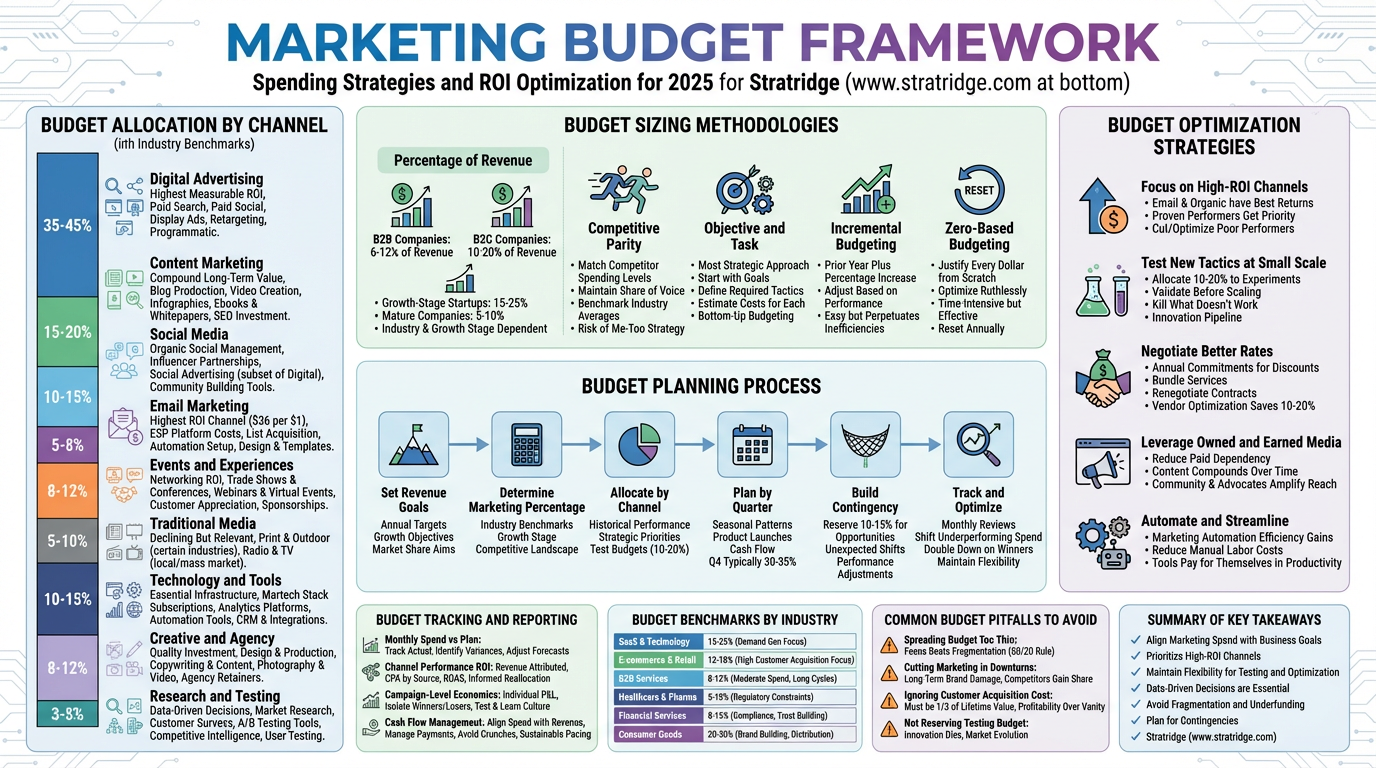
For many CMOs, the quarterly budget review with the CFO can feel less like a strategic alignment and more like an interrogation. The underlying tension often stems from a fundamental difference in language and priorities: marketing speaks in brand equity, customer engagement, and market share, while finance demands ROI, EBITDA, and shareholder value. Bridging this gap isn't about defending marketing as a cost center, but repositioning it as a strategic investment with quantifiable returns. This guide provides a framework for transforming that conversation from defensive to decisive, ensuring your marketing spend is not just approved, but understood and valued.
Understanding the CFO's Lens: Risk, Return, and Reliability
To effectively communicate with your CFO, you must first understand their primary concerns. CFOs are guardians of financial health, focused on capital allocation, risk management, and predictable returns. They see every dollar spent as an opportunity cost, meaning that money invested in marketing could have been invested elsewhere. Your role is to demonstrate that marketing offers the optimal return for the risk involved, contributing directly to the company's financial objectives.
Framing your proposals around these questions, rather than just activity metrics, is the first step toward a productive dialogue. It shifts the conversation from 'what we're doing' to 'what financial outcomes we're driving'.
Financial Framing: Speaking the Language of Value
Marketing metrics like MQLs, website traffic, or social engagement, while important internally, often don't resonate with a CFO. Translate these into financial terms that directly impact the balance sheet and income statement. Focus on metrics such as Customer Acquisition Cost (CAC), Customer Lifetime Value (CLTV), Marketing's Contribution to Revenue (MCR), and Return on Marketing Investment (ROMI).
ROMI provides a clear financial measure of marketing's efficiency and effectiveness.
When presenting, don't just state the numbers; explain the methodology behind them. Transparency builds trust. If your ROMI is 3:1, explain how that revenue attribution was calculated, what assumptions were made, and how those assumptions are validated. This proactive approach pre-empts skepticism and demonstrates rigor.
ROI Modeling: From Qualitative to Quantifiable Impact
Moving beyond simple ROMI, robust ROI modeling allows you to project future financial impact and stress-test your assumptions. This involves building scenarios that illustrate potential outcomes under different conditions. Consider:
This level of detail demonstrates a sophisticated understanding of financial planning and risk management, aligning your marketing strategy with the CFO's strategic priorities. It also provides a clear roadmap for accountability, which is crucial for securing continued investment.
Pre-empting the 'Prove It' Challenge: Data, Benchmarks, and Attribution
CFOs are inherently data-driven. The 'prove it' challenge is inevitable, and your ability to respond with credible, verifiable data is paramount. This requires a robust marketing analytics infrastructure and a clear attribution model.
Building Your 'Prove It' Arsenal
Be prepared to discuss the nuances of attribution, the limitations of your data, and your plans for continuous improvement. No system is perfect, but demonstrating a commitment to data integrity and continuous optimization will earn respect. For instance, you might reference how a strong revenue architecture directly supports more accurate attribution.
Strategic Alignment: Marketing as a Growth Engine
Ultimately, the CFO conversation is about demonstrating marketing's role as a strategic growth engine, not just a departmental expense. Connect your marketing initiatives directly to the company's overarching strategic goals, whether that's market expansion, new product launches, or increasing customer lifetime value. Show how marketing investment fuels these objectives.
Highlight how marketing intelligence, such as competitive insights or market positioning data, informs broader business strategy. For example, discuss how insights from a complete positioning audit framework can guide product development and sales strategy, not just marketing campaigns. This elevates marketing from a tactical function to a strategic partner in achieving corporate objectives.
The Art of the Narrative: Beyond the Numbers
While data is crucial, don't neglect the narrative. Your CFO is also a human being. Weave your data into a compelling story that illustrates the impact of marketing on real customers and the overall business. Use examples of successful campaigns, customer testimonials, or market shifts that marketing has capitalized on. This human element can make your presentation more memorable and persuasive.
Consider how your presentation aligns with broader executive communications. The principles of an effective executive briefing apply here: clarity, conciseness, and a focus on strategic implications. Avoid jargon and focus on the 'so what' for the business.
Conclusion: From Defense to Partnership
The CFO conversation doesn't have to be a battle. By adopting a financial mindset, building robust ROI models, leveraging comprehensive data, and aligning marketing strategy with corporate goals, you can transform it into a strategic partnership. This approach not only secures budget but also elevates marketing's standing within the organization, demonstrating its indispensable role in driving sustainable growth.
Stratridge provides the intelligence and frameworks to empower CMOs to confidently articulate marketing's financial impact. Our platform helps you build data-driven cases, model ROI, and gain the strategic visibility needed to turn budget discussions into opportunities for growth, ensuring your marketing investments are always seen as strategic assets.
Keep reading
Executive Briefing: Positioning for the Board Deck
How to explain positioning to a board — the four slides that matter, the metrics to pair with each, and the reason most positioning slides get skipped in the read-ahead.
Building a Revenue Architecture: From Lead Capture to Closed-Won
A technical guide for CMOs and marketing ops leaders on designing a full-stack revenue system, covering lead capture, scoring, routing, enrichment, CRM hygiene, and handoff protocols to optimize the entire revenue funnel.
The Modern B2B Marketing Org Chart: 2026 Edition
Navigate the complexities of B2B SaaS marketing team structures in 2026. This guide provides frameworks for scaling your marketing organization from 20 to 200+ employees, optimizing interactions between PMM, demand gen, brand, content, and ops.
Battle Cards
Give your reps the exact rebuttal for every competitor — updated automatically.
Battle Cards generates per-competitor rebuttal kits grounded in your own positioning — not generic 'we're better because' copy. When Competitor Signals detects a material move, the relevant card updates automatically.
- ✓Per-competitor cards built from your own positioning
- ✓Auto-updates when competitors change their story
- ✓Built for live deals, not slide decks that rot in Drive