B2B vs B2C Marketing Strategies
Where the playbooks genuinely diverge — and where B2B teams keep borrowing the wrong B2C tactic.
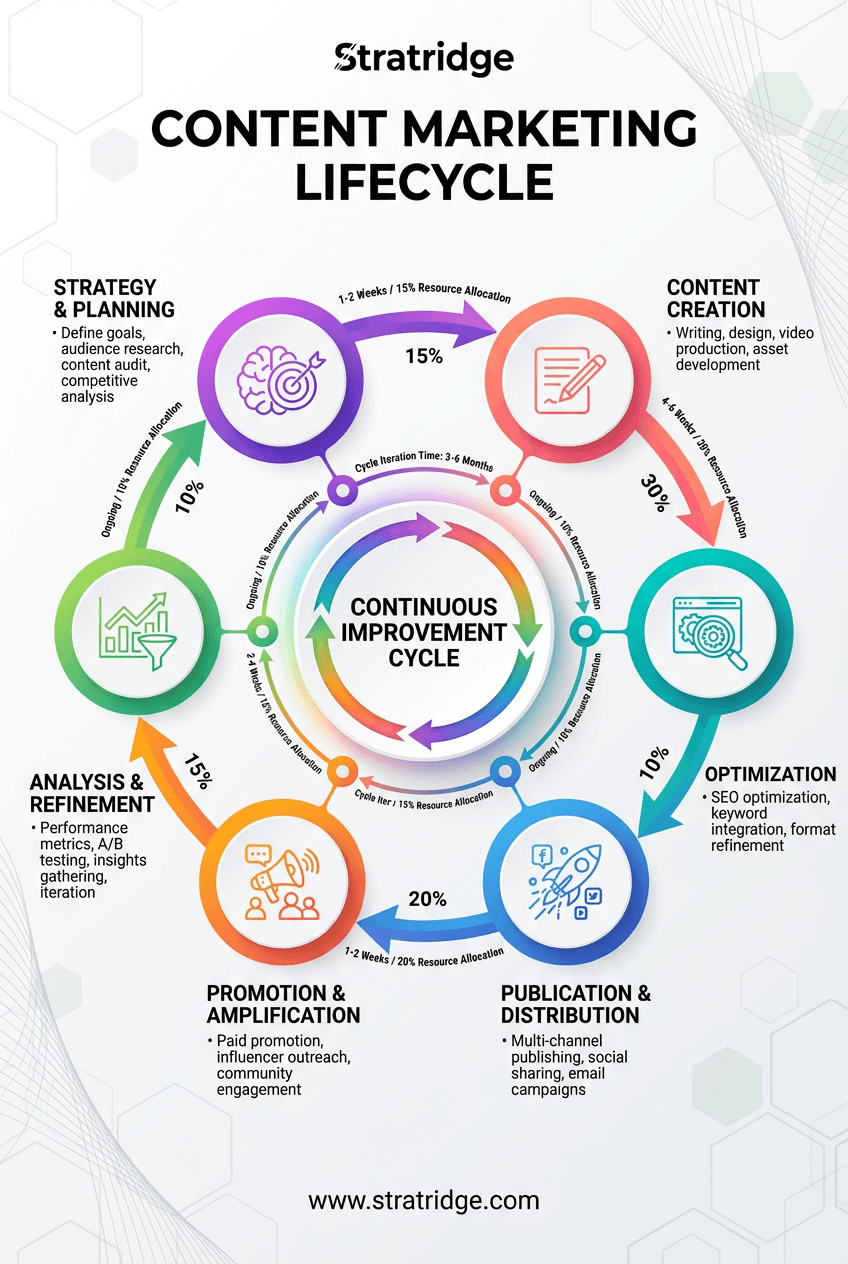
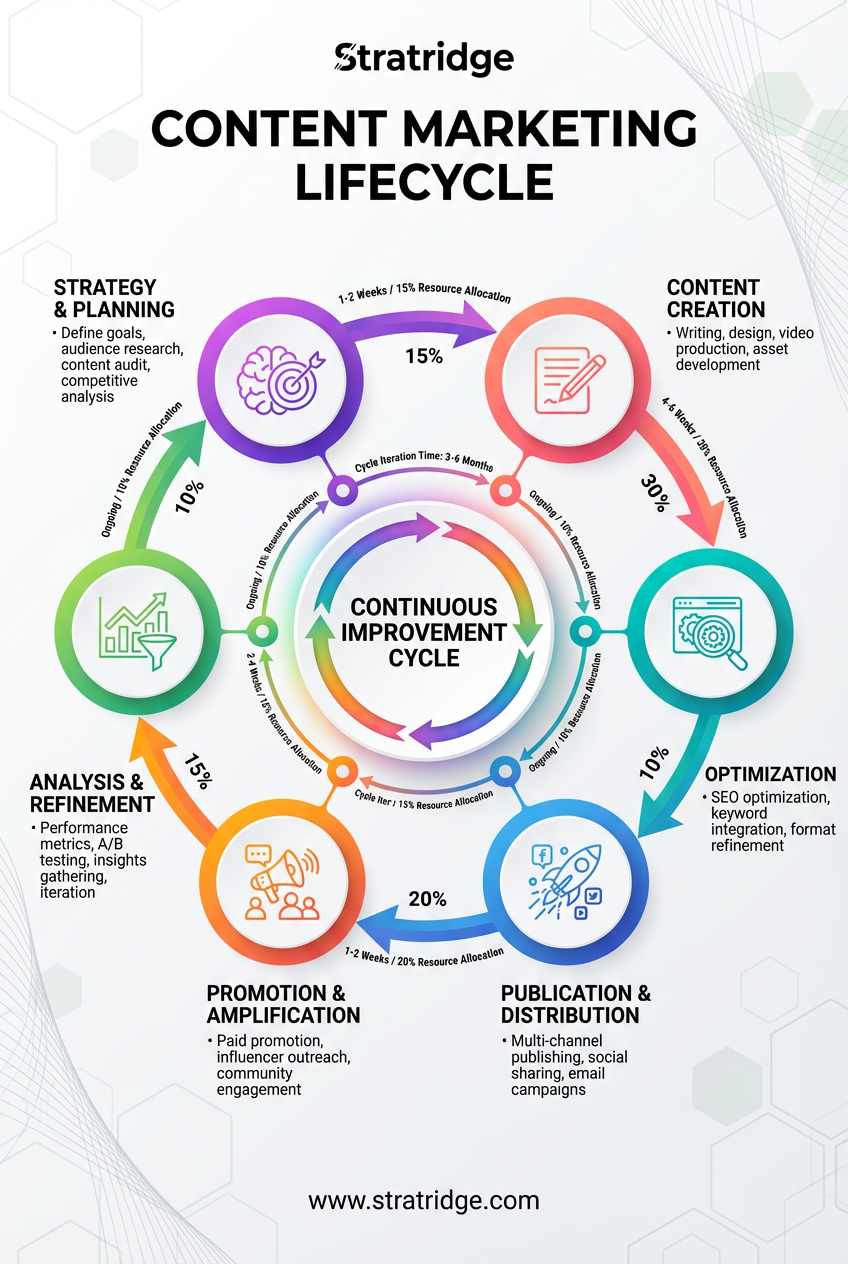
What this infographic is actually arguing.
The B2B-versus-B2C framing is both over-used and under-analyzed. Every B2B marketer has seen the side-by-side comparison, nodded at "longer sales cycles, more stakeholders," and then gone back to borrowing B2C tactics anyway. This infographic covers the places the playbooks genuinely diverge and the specific tactics B2B teams keep importing that don't translate.
The structural differences are real. B2B sales cycles run 3-18 months; B2C runs minutes to weeks. B2B buying committees have 6-10 stakeholders; B2C has one to three. B2B deal sizes are 100-10,000× larger per transaction but on 10,000× lower volume. These differences compound: a channel that works for B2C at volume fails for B2B on economics, and a channel that works for B2B on economics fails for B2C on scale.
The tactical differences follow. B2C marketing optimizes for the single conversion moment — the ad, the landing page, the cart. B2B marketing has to serve the six-month journey across nine stakeholders who never all read the same content. B2C wins on emotional resonance and aesthetic quality; B2B wins on credibility, specificity, and forwardability (content that a champion can send to their VP without it losing signal).
The tactics B2B teams keep borrowing from B2C that don't work: influencer marketing at the follower-count level (B2B cares about credibility with a specific professional audience, not raw reach), retargeting at B2C frequencies (committee buyers get fatigued faster and form negative brand associations), flash-sale-style discounting (signals weakness in a considered purchase), and meme-driven social content (converts poorly for high-ticket items where buyers want evidence, not entertainment).
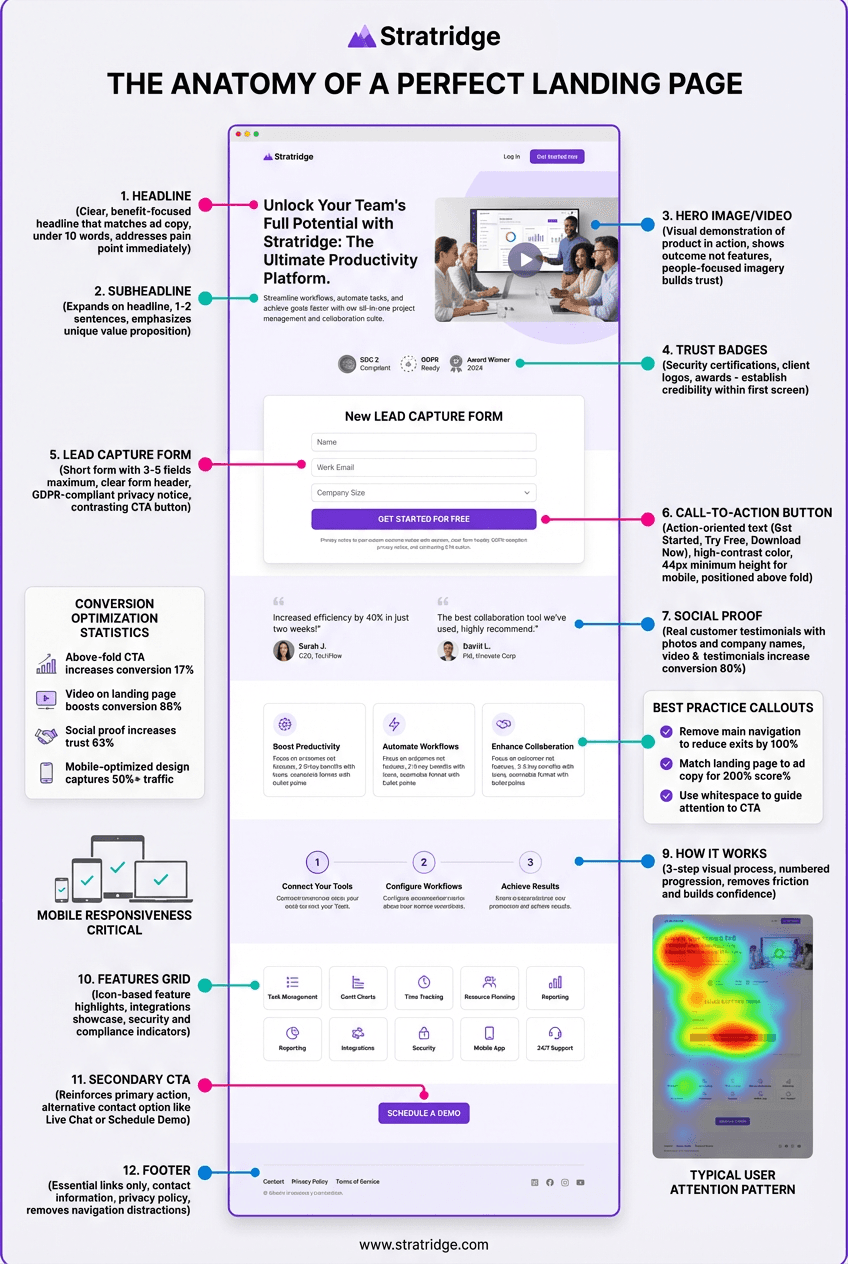
The tactics B2B can productively borrow: brand building as a long-term compounding asset (not just demand-gen), community-led growth (the B2C playbook adapted for professional contexts works well), and conversion-rate discipline on landing pages (B2B sites often leave 30-50% conversion lift on the table because the CRO rigor that's standard in B2C is rare in B2B).
The failure mode to watch: executives who ran consumer businesses now running B2B programs and importing the wrong playbook wholesale. The instinct to "just do what worked at [former consumer company]" reliably underperforms for 12-18 months before being course-corrected.
Strategic Frameworks
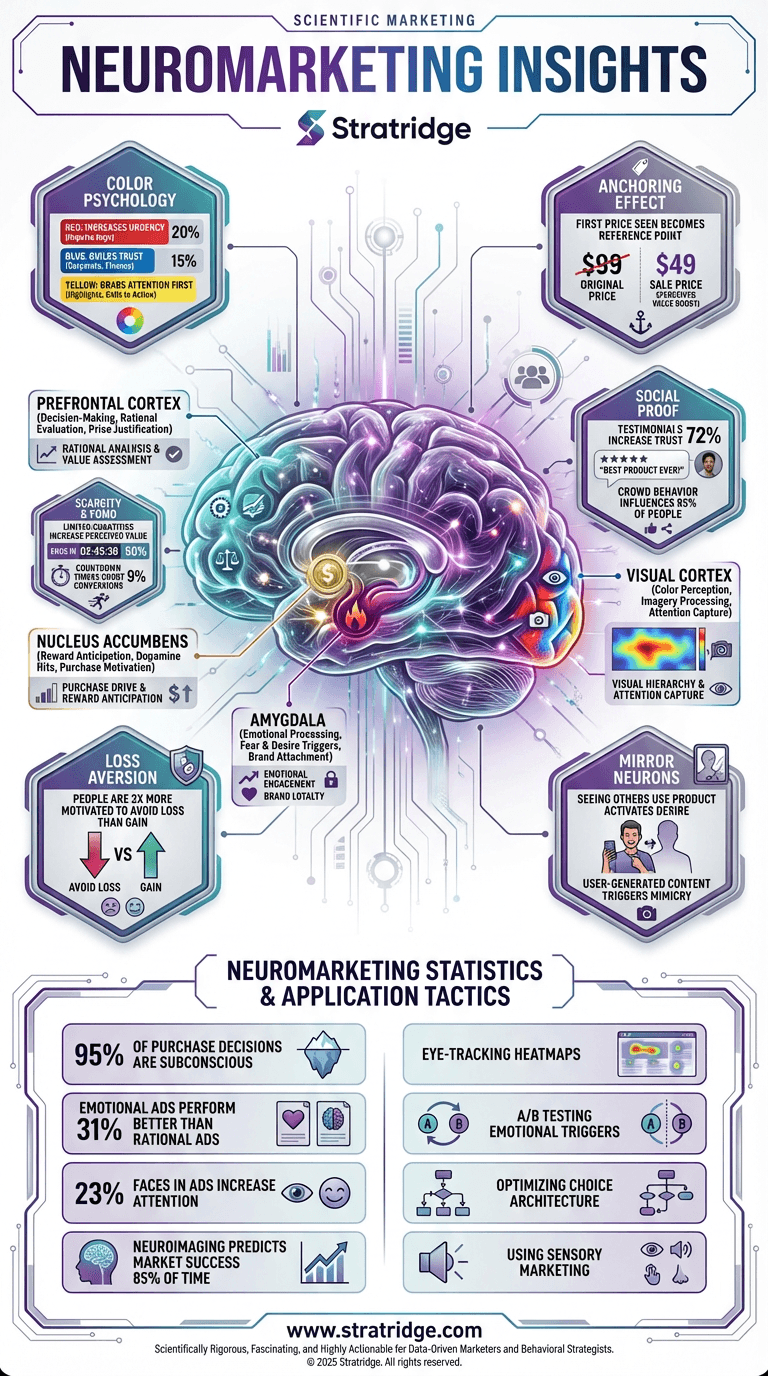
The Buyer's Journey
Awareness, consideration, decision — and the invisible fourth stage your content needs to serve.
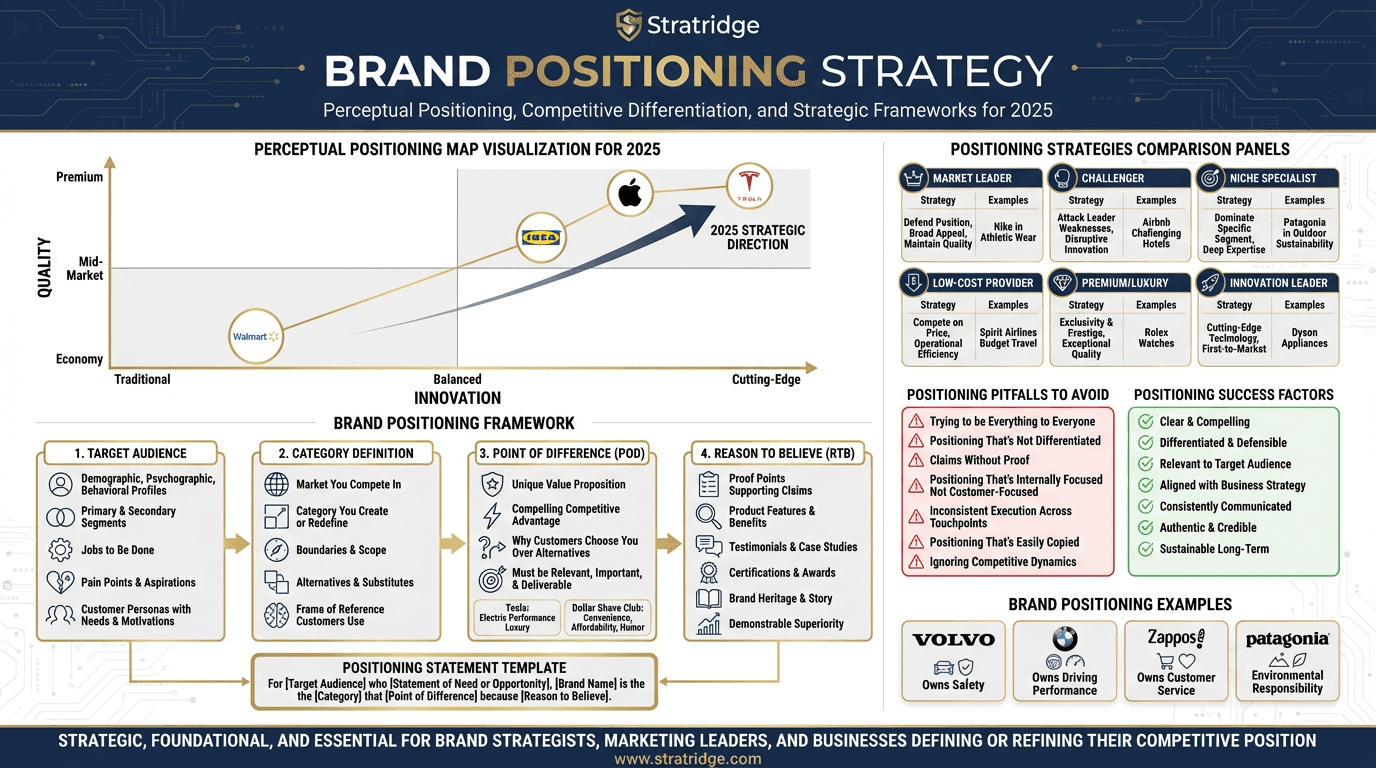
Brand Positioning Strategy
The four inputs a defensible positioning statement actually needs — and the template most teams use instead.
Omnichannel Marketing Strategy
Multi-channel versus omnichannel — the distinction that matters, and what real coordination looks like.
This infographic is free. The audit is too.
Paste your URL and Stratridge returns an audit graded against the six dimensions and twenty-four factors — so you see where the story on your site lines up with the story this infographic describes, and where it doesn't.