Brand Positioning Strategy
The four inputs a defensible positioning statement actually needs — and the template most teams use instead.
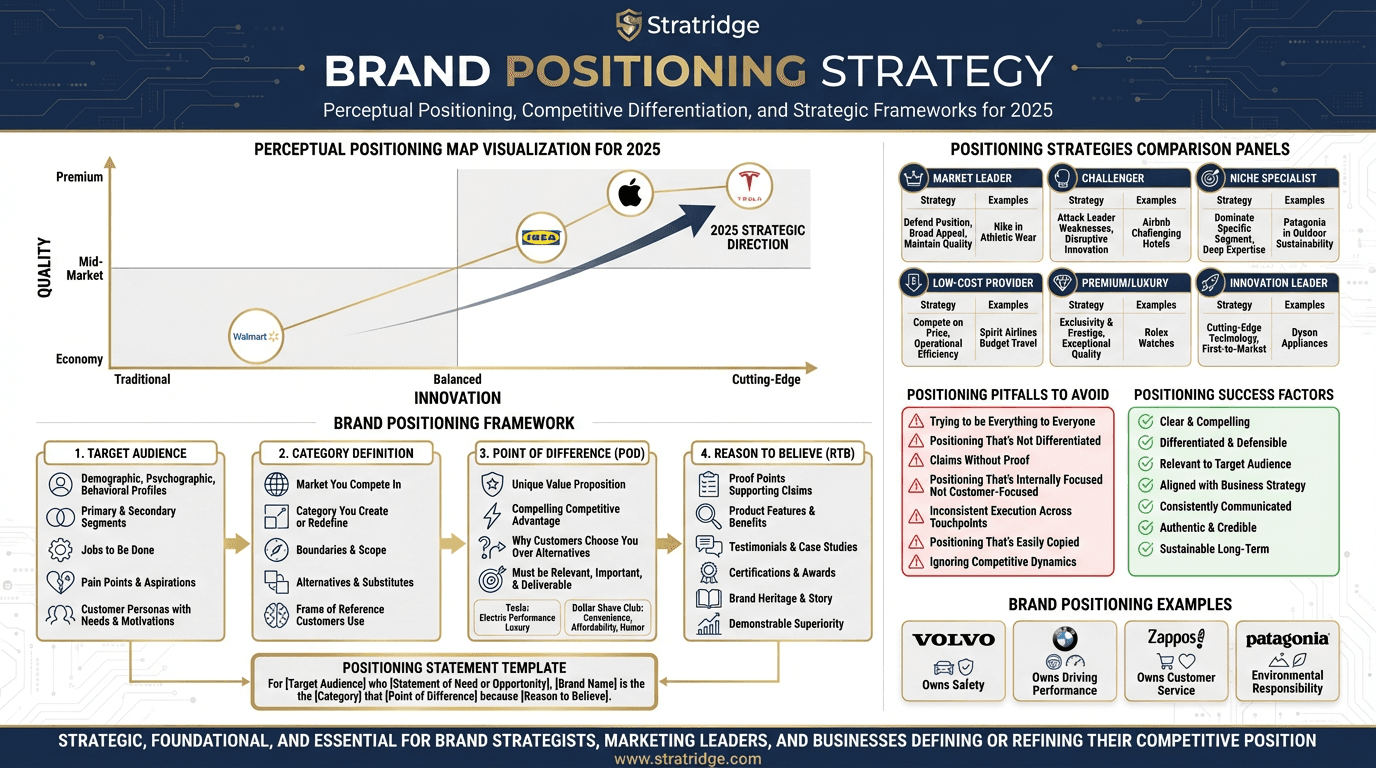
What this infographic is actually arguing.
Positioning is the single highest-leverage decision a marketing team ever makes and the one most teams treat as a workshop deliverable rather than a strategic commitment. This infographic lays out the four inputs a defensible positioning statement requires: the category you've chosen to compete in, the audience you've chosen to serve, the point of difference you can credibly own, and the alternative the buyer is actually comparing you to.
Notice what's not on that list: your feature set, your mission statement, and the words your CEO insists on using. Positioning isn't what you want to say — it's the gap in the market your buyer can feel, named in language they already use. The hardest part is the trade-off. Every real positioning choice excludes customers, competitors, and use cases. Teams that refuse to exclude end up with positioning so broad it describes the whole category, which means it differentiates nothing.
The template most teams fill out — "For [audience], [product] is the [category] that [benefit]" — is better than nothing and worse than most teams realize. It produces a sentence that reads well internally and converts poorly externally, because the benefit clause always ends up being something every competitor also claims. A stronger positioning move starts with the alternative: what specifically are you better than, and for whom? If you can't name the alternative, you haven't positioned.
Pressure-test positioning against three artifacts: your homepage hero, your sales deck opening slide, and your top-performing case study. If all three tell a different story, positioning hasn't traveled — it's locked in a strategy deck nobody reads. The fix isn't another workshop; it's picking one claim, putting it everywhere, and living with it long enough for the market to recognize it.
Positioning also decays. Competitors copy claims, categories mature, buyer jobs shift. Revisit every 18-24 months — not to change for change's sake, but to check whether the claim still excludes what it needs to exclude.
Stratridge's audit is the productized version of this analysis: it grades your live site against six dimensions of a complete marketing posture — twenty-four scored factors — and tells you which claim is actually legible to a buyer who's never heard of you.
Strategic Frameworks

The Buyer's Journey
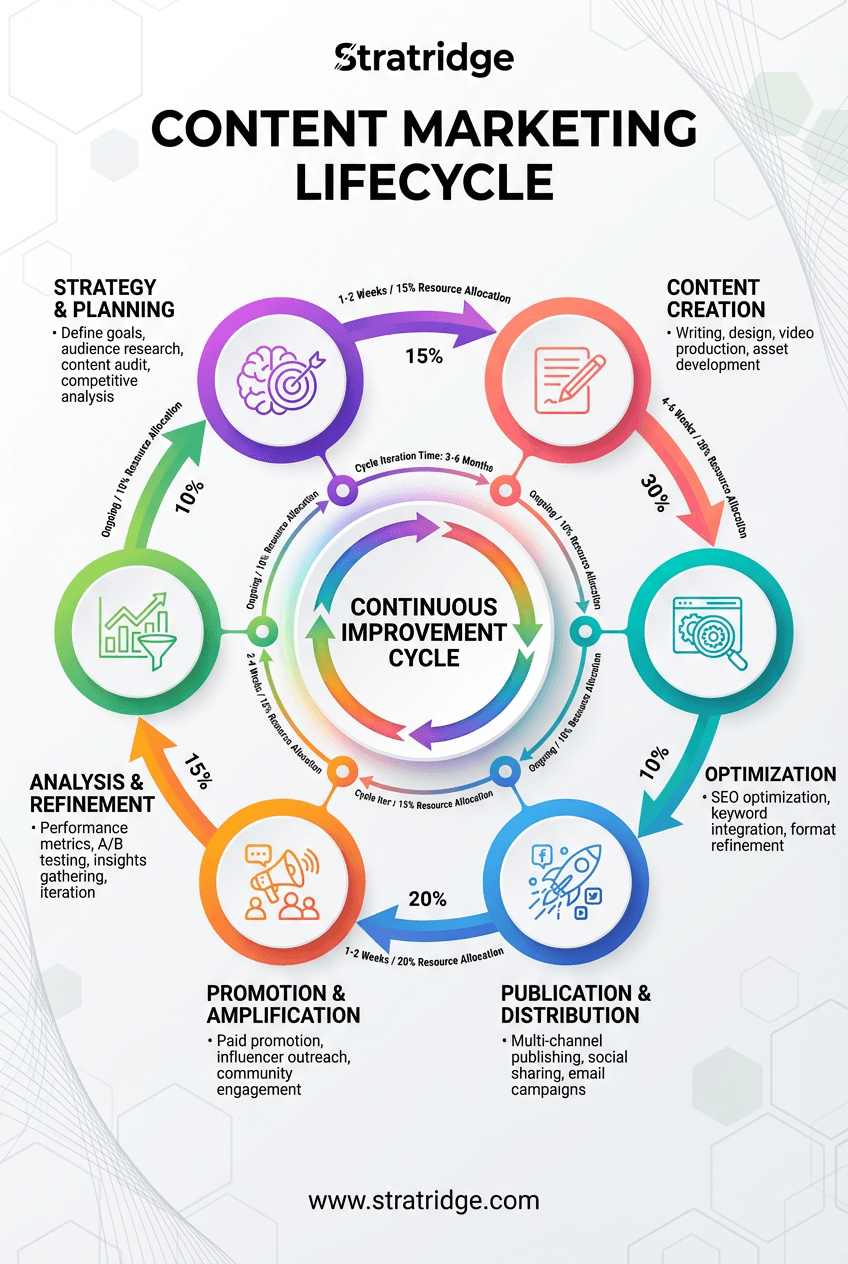
Awareness, consideration, decision — and the invisible fourth stage your content needs to serve.
B2B vs B2C Marketing Strategies
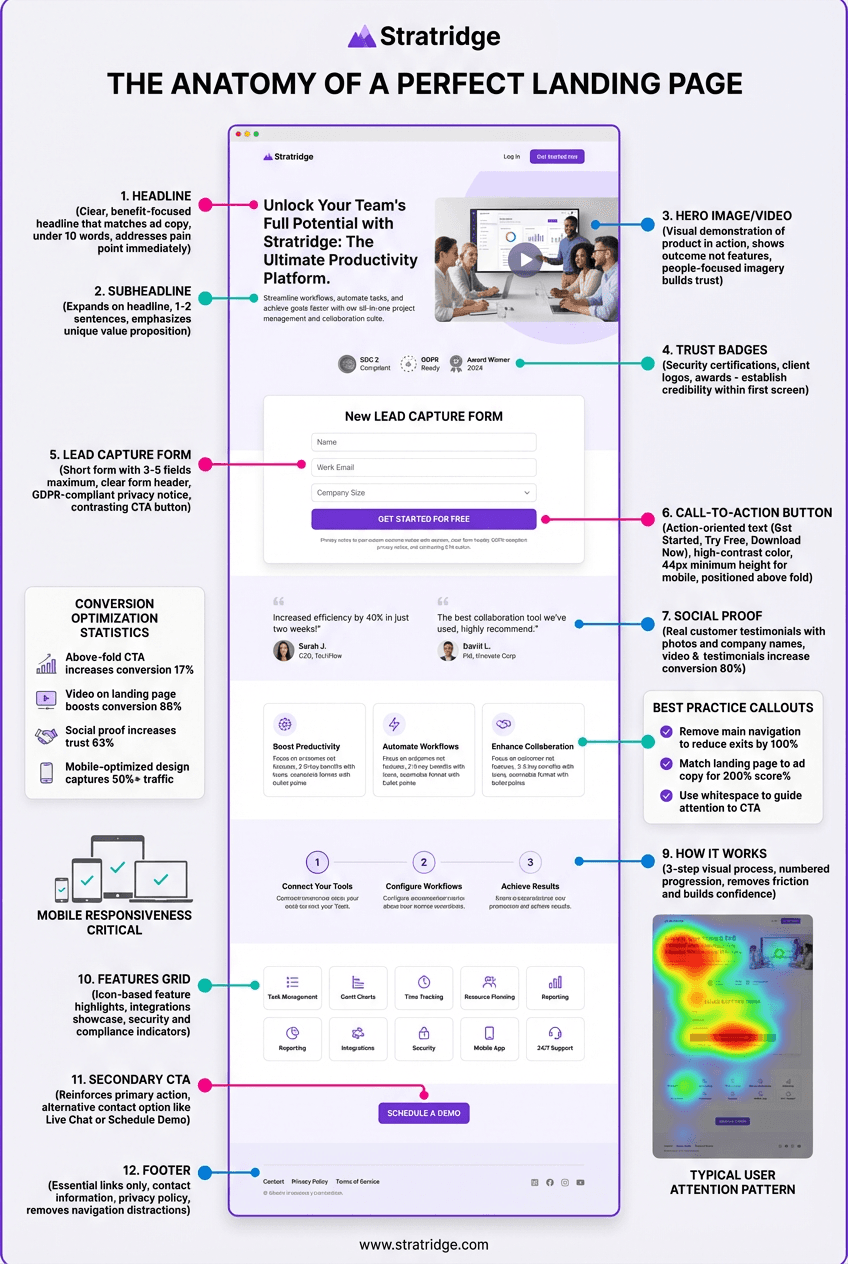
Where the playbooks genuinely diverge — and where B2B teams keep borrowing the wrong B2C tactic.
Omnichannel Marketing Strategy
Multi-channel versus omnichannel — the distinction that matters, and what real coordination looks like.
This infographic is free. The audit is too.
Paste your URL and Stratridge returns an audit graded against the six dimensions and twenty-four factors — so you see where the story on your site lines up with the story this infographic describes, and where it doesn't.