Omnichannel Marketing Strategy
Multi-channel versus omnichannel — the distinction that matters, and what real coordination looks like.
What this infographic is actually arguing.
"Omnichannel" is one of the most-claimed and least-practiced strategies in B2B marketing. Most teams that call themselves omnichannel are running multi-channel — meaning they're present on several channels but the channels don't know about each other, the messaging fragments, and the buyer experiences it as disconnected noise. This infographic covers the real distinction and what coordination actually looks like when it's working.
Multi-channel is easy: pick the channels where your buyers are, show up on each one with appropriate creative, and optimize each channel against its own performance metric. This is the right starting point and it produces measurable results. What it doesn't produce is the compounding effect of a buyer receiving a coherent story across every surface they encounter.
Omnichannel is harder and more valuable. The message adapts to the channel but the story is one story. A buyer who sees a LinkedIn ad, reads a blog post, attends a webinar, and ends up on the pricing page encounters the same claim at different depths, not different claims from a confused brand. The coordination happens at the strategy layer — one positioning, one claim hierarchy, one voice — and the execution layer — sequenced touches, shared identifiers, channel-aware creative.
The operational requirements for genuine omnichannel are higher than most teams budget for. You need a single view of the buyer across surfaces (usually a CDP or a well-maintained CRM with site tracking), a content strategy that accepts channel-specific formats without drifting message, and a governance layer that catches when a product launch goes out on LinkedIn three days before the site copy updates.
The failure modes are predictable. The campaign goes live unevenly across channels because each team works on its own calendar. The claim shifts because different writers are behind different channels. The retargeting sequence hits a customer who already bought because the ad tool doesn't know about the CRM.
For most B2B companies, the right move isn't aspiring to full omnichannel on day one. It's running tight multi-channel with a coordinated messaging layer — every channel says the same thing, even if the execution isn't sequenced — and adding the orchestration layer once the foundation is consistent. Orchestration on top of fragmented messaging just means the fragmentation is more efficient.
Strategic Frameworks

The Buyer's Journey
Awareness, consideration, decision — and the invisible fourth stage your content needs to serve.
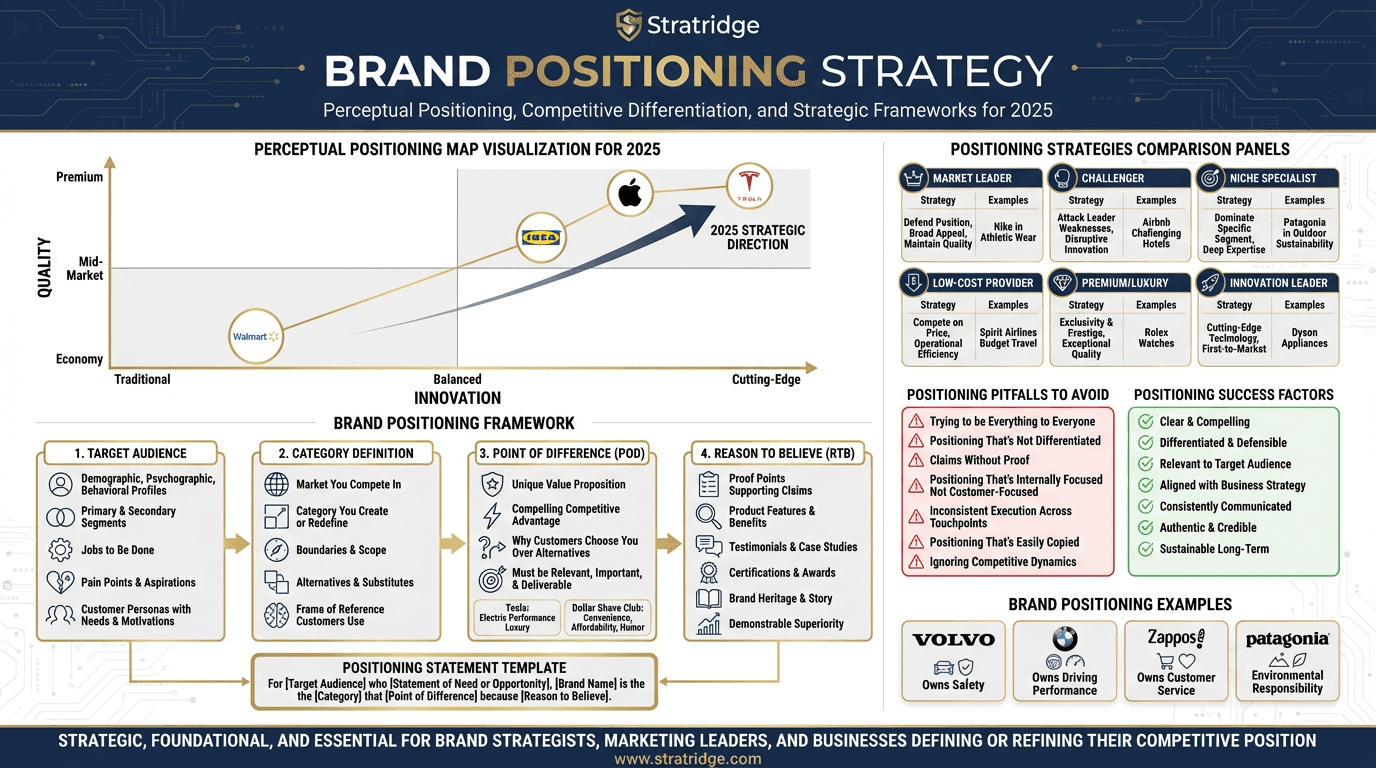
Brand Positioning Strategy
The four inputs a defensible positioning statement actually needs — and the template most teams use instead.
B2B vs B2C Marketing Strategies
Where the playbooks genuinely diverge — and where B2B teams keep borrowing the wrong B2C tactic.
This infographic is free. The audit is too.
Paste your URL and Stratridge returns an audit graded against the six dimensions and twenty-four factors — so you see where the story on your site lines up with the story this infographic describes, and where it doesn't.