In the high-stakes world of B2B SaaS, the CMO's role extends far beyond demand generation and brand building. As companies mature and seek further investment, the marketing leader becomes a crucial voice in investor relations. The challenge lies in translating complex marketing strategies and their impact into a language that resonates with financial analysts and potential investors, often under intense scrutiny. This requires a nuanced understanding of financial metrics, market positioning, and the art of narrative construction that goes beyond typical customer-facing communications.
The CMO's Mandate in Investor Relations
For many marketing leaders, investor relations (IR) can feel like a distant, finance-centric domain. However, the marketing function is inherently tied to market perception, growth narratives, and competitive differentiation—all critical components of investor confidence. A CMO's involvement in IR is not merely reactive; it's a proactive opportunity to shape the company's valuation story and ensure that marketing's strategic contributions are accurately understood and appreciated by the financial community.
This mandate includes defining the total addressable market (TAM), articulating market share gains, demonstrating customer acquisition cost (CAC) efficiency, and forecasting future growth based on marketing-driven initiatives. It's about providing the data and the narrative that substantiates the company's long-term potential.
Crafting the Investor Narrative: Beyond the Pitch Deck
The investor narrative is distinct from a sales pitch or a brand story. It's a strategic articulation of the company's vision, market opportunity, competitive advantages, and growth trajectory, all underpinned by credible data. For the CMO, this means collaborating closely with the CEO and CFO to ensure a consistent, compelling story is told across all investor touchpoints.
Key elements of this narrative include:
- Market Opportunity: Clearly defining the problem the company solves, the size of the market, and the whitespace available for growth.
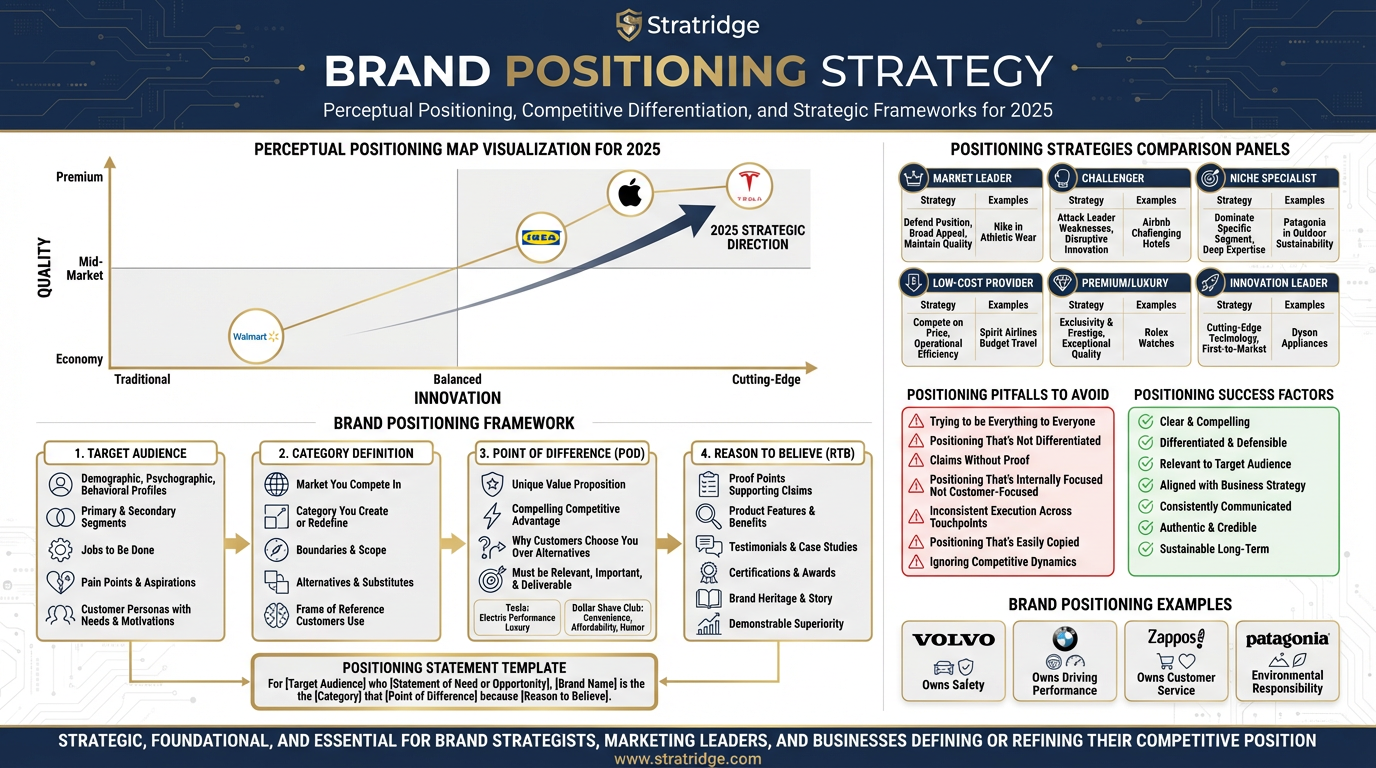
- Competitive Differentiation: Articulating how the company stands apart from competitors, not just in features, but in its unique value proposition and defensible market position. This often involves leveraging insights from a comprehensive complete positioning audit framework.
- Growth Levers: Explaining the marketing strategies and initiatives that will drive future revenue, such as new market entry, product expansion, or customer lifecycle optimization.
- Unit Economics: Demonstrating the efficiency of marketing spend, customer lifetime value (LTV), and the scalability of acquisition channels.
Preparing for the S-1: The Marketing Section
The S-1 filing, a registration statement required by the SEC for public offerings, is a monumental undertaking. The marketing section of the S-1 is where the company formally presents its market, strategy, and growth potential to prospective investors. This is a critical document where precision and substantiation are paramount.
For the CMO, preparing this section involves:
- Market Analysis: Providing a detailed overview of the industry, target customers, and market trends. This includes third-party research and internal data to support claims about market size and growth.
- Go-to-Market Strategy: Outlining the company's approach to customer acquisition, retention, and expansion. This covers channels, messaging, pricing, and sales enablement. A well-defined product launch narrative checklist can be invaluable here.
- Competitive Landscape: Identifying key competitors and articulating the company's competitive advantages and barriers to entry. This requires a deep understanding of competitive differentiation.
- Marketing Metrics: Presenting key performance indicators (KPIs) that demonstrate marketing effectiveness and scalability, such as CAC, LTV, payback periods, and pipeline contribution.
- Risk Factors: Collaborating with legal and finance teams to identify and articulate marketing-related risks, such as changes in customer preferences, competitive pressures, or regulatory shifts.
S-1 Marketing Section Readiness
Engaging with Analysts and Investors
Beyond formal filings, CMOs are increasingly expected to engage directly with financial analysts, institutional investors, and the media. These interactions are opportunities to reinforce the company's narrative, address concerns, and build long-term relationships. Effective communication in these settings requires a blend of strategic insight and tactical execution.
- Analyst Briefings: Providing regular updates on market trends, product developments, and marketing performance. This requires a concise and impactful presentation style, similar to an executive briefing for a board deck.
- Investor Days: Participating in events where the company presents its strategy and performance to a large audience of investors. The CMO's role is to articulate the market opportunity and growth drivers.
- Earnings Calls: Contributing to the marketing-related commentary and being prepared to answer questions about market conditions, competitive dynamics, and future growth initiatives.
- Media Relations: Working with PR to ensure consistent messaging in financial media, reinforcing the company's investment thesis.
Measuring Marketing's Impact on Valuation
Demonstrating marketing's direct impact on company valuation is paramount. This moves beyond traditional marketing ROI to connect marketing activities with enterprise value. Frameworks for this include:
- Customer Lifetime Value (LTV) to Customer Acquisition Cost (CAC) Ratio: A fundamental metric for SaaS businesses, indicating the efficiency of customer acquisition. Marketing's role is to optimize both sides of this equation.
- Brand Equity and Awareness: While harder to quantify directly, strong brand equity can reduce CAC, increase pricing power, and improve customer retention, all contributing to higher valuation multiples.
- Market Share Growth: Demonstrating consistent gains in market share, particularly in high-growth segments, signals strong competitive performance and future revenue potential.
- Pipeline Contribution: Clearly linking marketing-generated leads and opportunities to closed-won revenue, showcasing marketing's direct impact on the sales pipeline and overall revenue architecture.
This simplified formula highlights key areas where marketing directly influences enterprise valuation.
Strategic Context and Future Outlook
Effective investor relations for marketing leaders is not a one-time event but an ongoing strategic imperative. It requires a deep understanding of financial markets, a mastery of data-driven storytelling, and the ability to collaborate seamlessly across executive functions. As the B2B SaaS landscape evolves, with increasing scrutiny on sustainable growth and profitability, the CMO's voice in investor conversations will only become more critical.
By proactively shaping the narrative, substantiating claims with robust data, and engaging transparently with the financial community, marketing leaders can significantly enhance their company's perceived value and contribute directly to its long-term success. This strategic involvement elevates the marketing function from a cost center to a core driver of enterprise value.
Stratridge provides the intelligence and frameworks necessary for marketing leaders to confidently navigate investor relations. Our platform offers diagnostic tools for competitive positioning, market analysis, and narrative construction, enabling CMOs to present a compelling and data-backed story to the financial community. From refining your anatomy of a perfect positioning brief to understanding the broader strategic context that influences investor perception, Stratridge empowers you to articulate marketing's value as a core driver of enterprise growth.
Keep reading
Executive Briefing: Positioning for the Board Deck
How to explain positioning to a board — the four slides that matter, the metrics to pair with each, and the reason most positioning slides get skipped in the read-ahead.
Executive Communication: Explaining a Positioning Pivot to the Board
A template and three-act memo structure for telling your board the positioning is changing — without it landing as a failure narrative
The Positioning Audit That Saved a $200M Exit (Case Study)
Ten weeks before a scheduled exit, a positioning audit surfaced a Layer 4 gap that the acquirer's diligence would have exposed. Here's what the audit found, what the remediation looked like under time pressure, and what the exit math actually looked like.
Positioning Brief
One page that keeps your whole team telling the same story.
The Positioning Brief is a living, one-page document the Analyst re-writes as your pillars, signals, and decisions change. Short enough for the board to read in four minutes, specific enough for a new hire to use on day one.
- ✓One page — readable by the board in four minutes
- ✓Re-writes itself as your market and strategy evolve
- ✓Bridges the gap between strategy and execution