Ecommerce Conversion Optimization
Where ecommerce conversion lives and dies — and the pattern most DTC teams keep running into the ground.
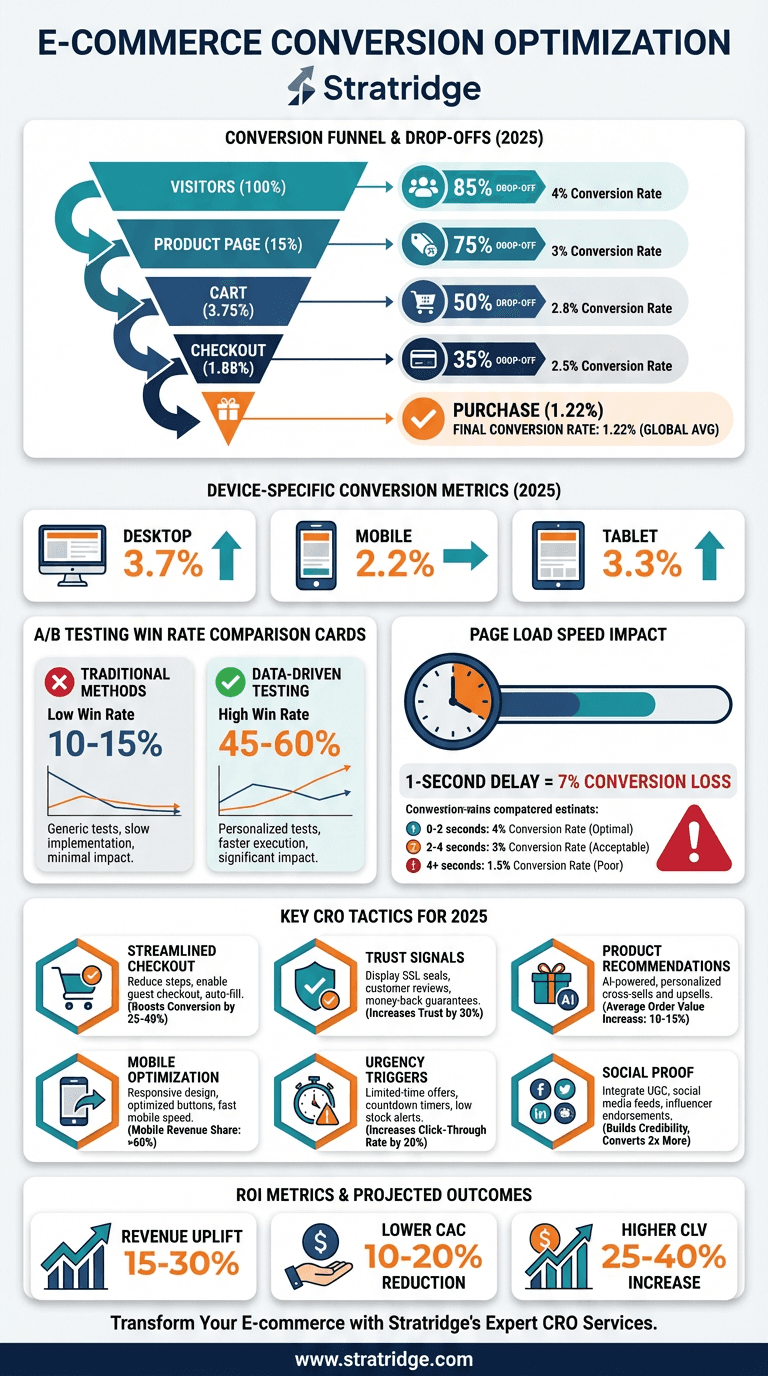
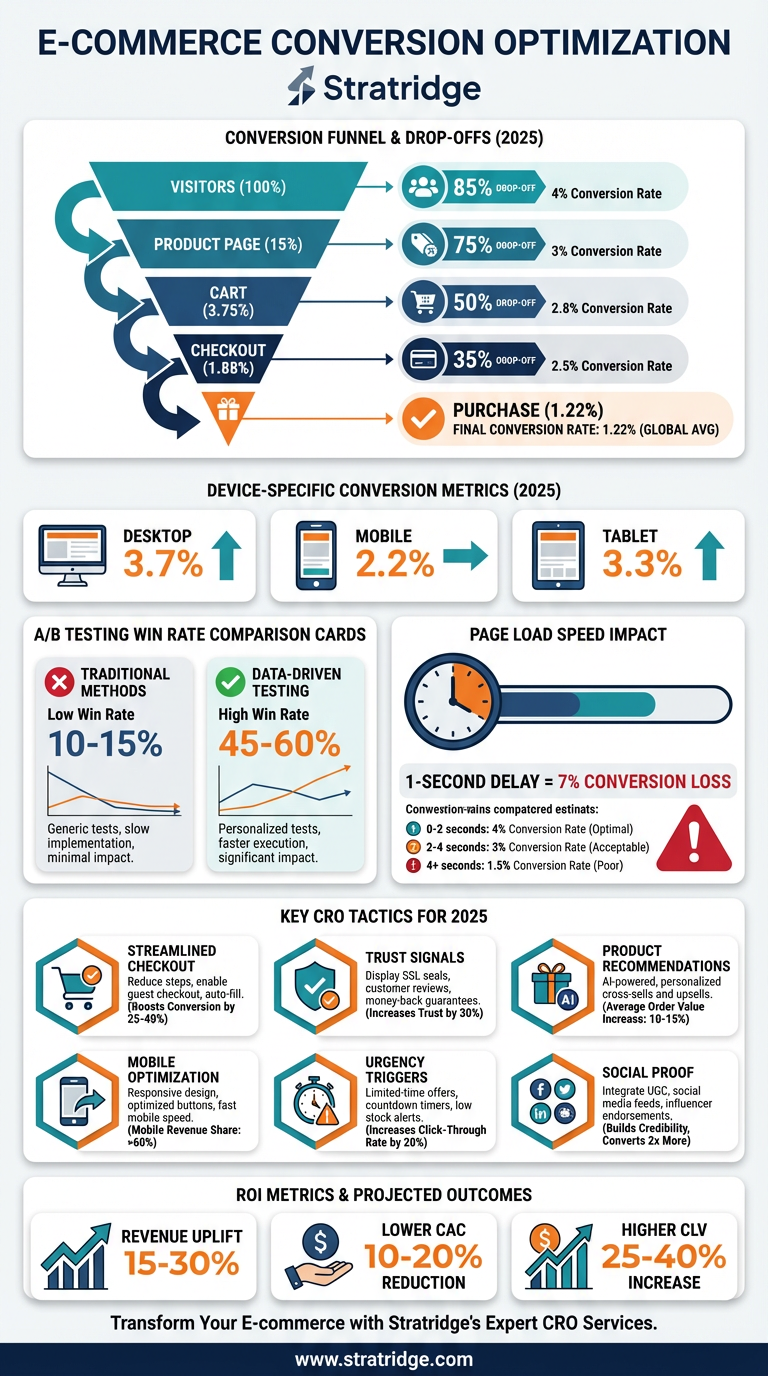
What this infographic is actually arguing.
Ecommerce conversion optimization is one of the most mature disciplines in digital marketing and one where the best practices have calcified into a house style that increasingly fails. The pattern — urgency timers, cart-abandonment emails, fake scarcity, exit-intent modals, one-click checkout — was a genuine improvement when introduced and has become table stakes that no longer differentiates and often annoys. This infographic covers what works in 2025 and where the playbook is showing its age.
The fundamentals still matter. Page speed is load-bearing: every 100 milliseconds of delay on a product page costs measurable conversion. Image quality, product photography, and variant selection UI compound — buyers won't commit to a $200 purchase they can't visualize clearly. Trust signals (reviews, return policy, shipping details) should be above the fold on product pages, not buried at the bottom.
The checkout flow is still where the single biggest conversion lift lives for most stores. The gap between a two-step checkout done well and a five-step checkout done poorly can be 30 percentage points of completion rate. Reducing required fields, offering guest checkout, and surfacing shipping costs early in the flow all compound.
Where the playbook is tired: aggressive urgency tactics that every buyer has seen a thousand times now produce reactance, not conversion. "Only 3 left" countdowns, spinning wheels for discounts, and modals that interrupt the first five seconds of the page all read as manipulation in 2025. They still convert, marginally; they also damage brand equity in ways the A/B test doesn't measure.
The pattern most DTC teams keep running into the ground: discount-led acquisition. The first purchase is acquired on a 15%-off-first-order coupon, the customer expects discounts forever, and LTV:CAC never recovers. Brands that train customers to wait for sales end up unable to run at full margin.
What's working in 2025: subscription-first models (where margin-compatible), product-led content (long-form content that explains the product and serves as both SEO and conversion asset), post-purchase experiences that drive repeat-rate (the second purchase is where LTV is built), and honest pricing presentation.
The metric most stores should be watching more carefully than they do: repeat purchase rate at 90 days. It's the single best leading indicator of LTV and the one most heavily distorted by discount-led acquisition.
Conversion & Engagement
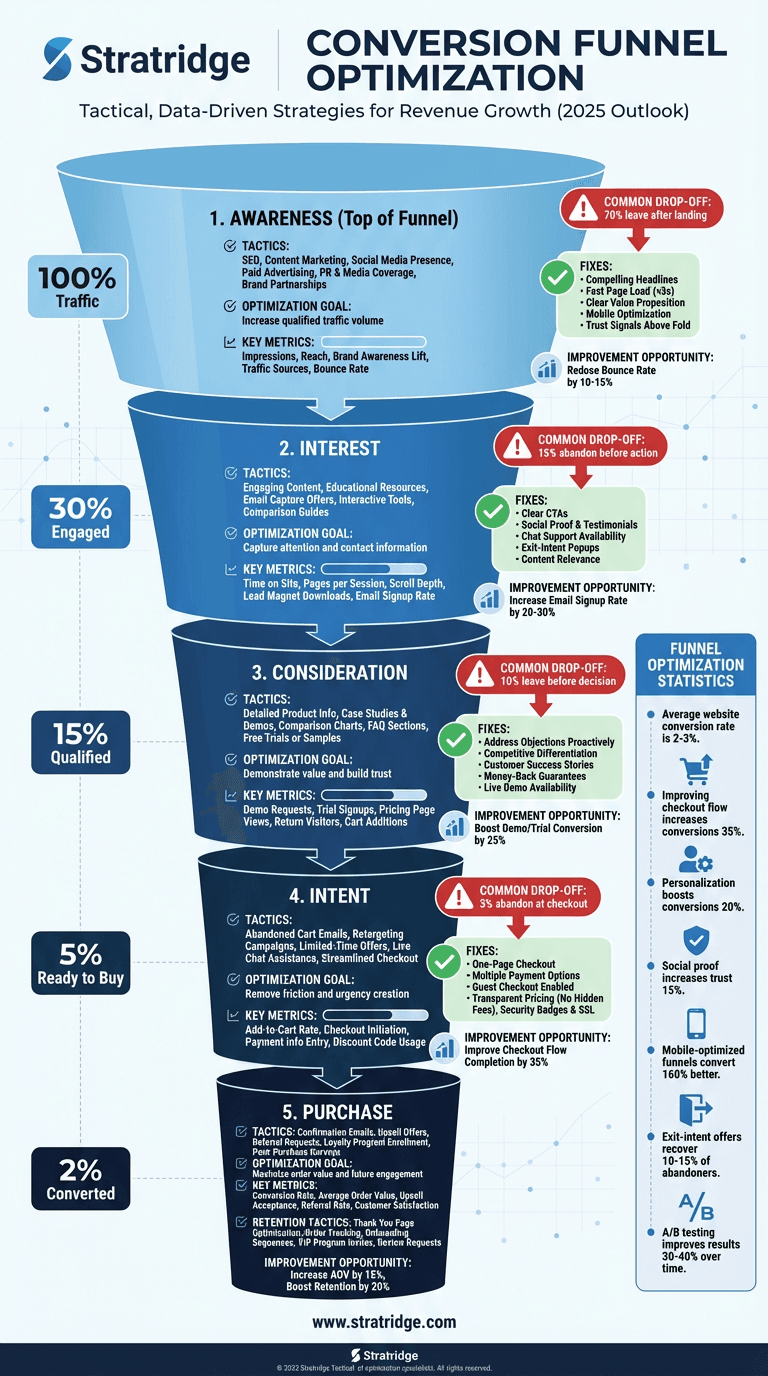
Conversion Funnel Optimization
Where funnels actually break — and the order of operations for fixing them without rebuilding the whole thing.
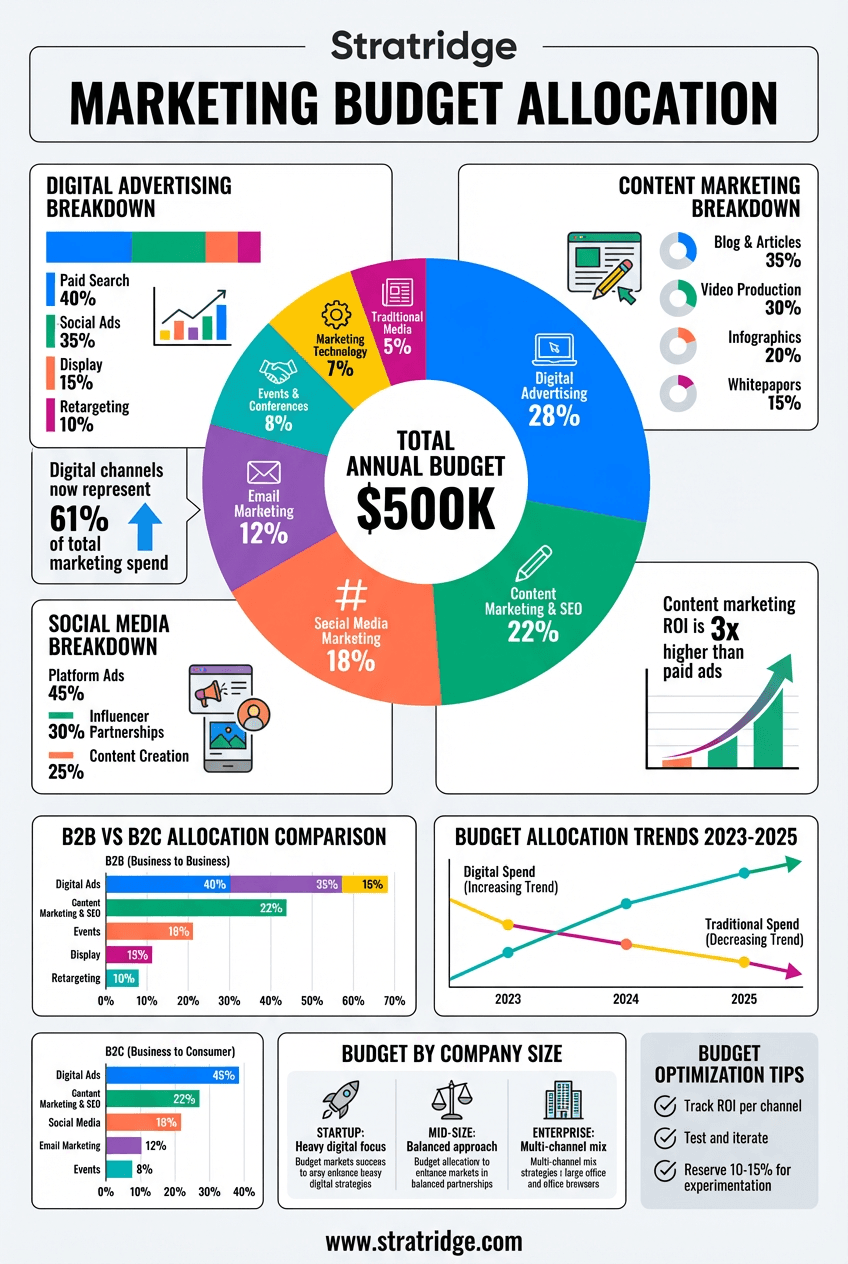
Effective Call-to-Action Design
The two-word test that predicts CTA performance better than any color or placement study.
Anatomy of a Perfect Landing Page
Seven sections that actually do work — and why most landing page templates ship with three too many.
This infographic is free. The audit is too.
Paste your URL and Stratridge returns an audit graded against the six dimensions and twenty-four factors — so you see where the story on your site lines up with the story this infographic describes, and where it doesn't.