Top Marketing Tools and Software
The five tools most B2B stacks need — and the eight every team over-buys on.
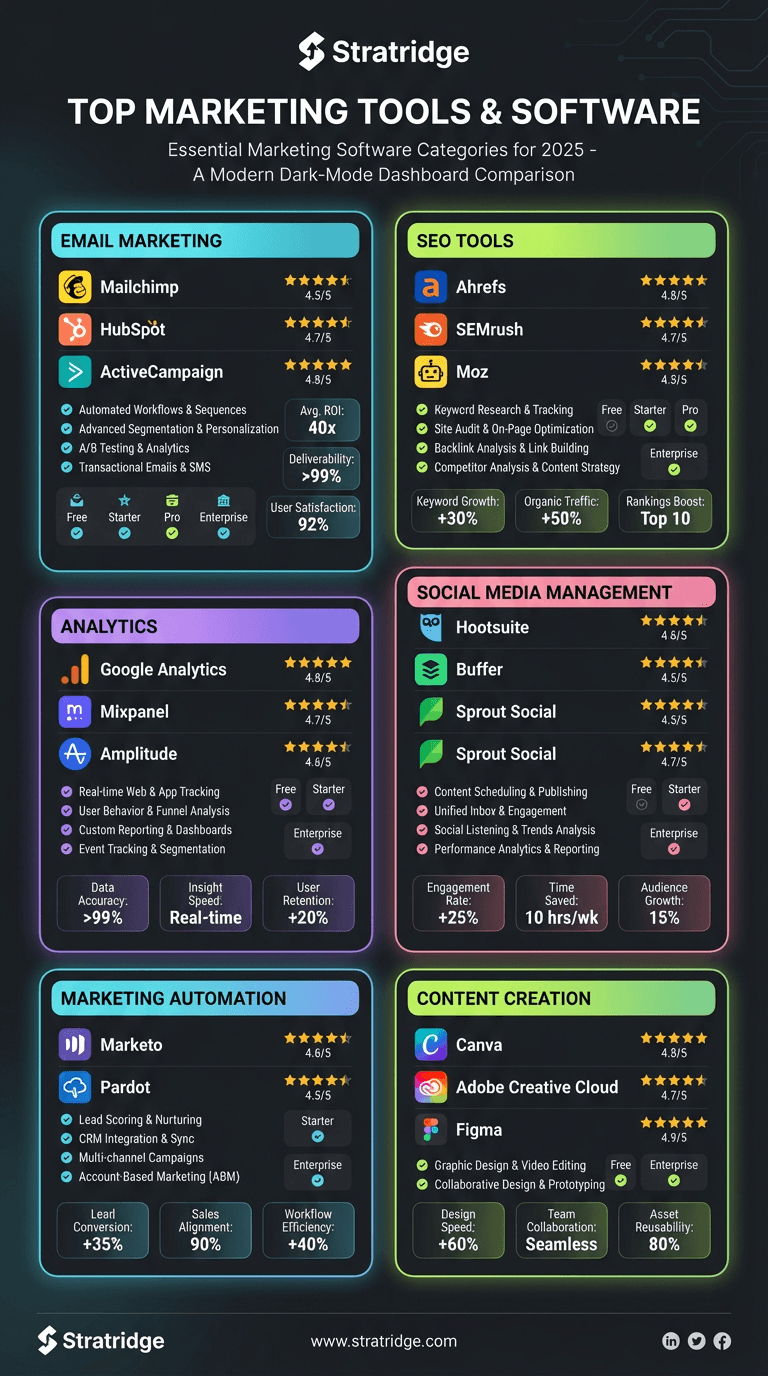
What this infographic is actually arguing.
Martech is an over-sold category. The average B2B marketing team licenses 30+ tools, uses 8 actively, and pays for the rest. Vendor pitches and LinkedIn thought leadership consistently push the frontier toward more tooling and rarely toward consolidation. This infographic is the opposite take: the five tools most B2B stacks actually need, and the categories most teams over-buy on.
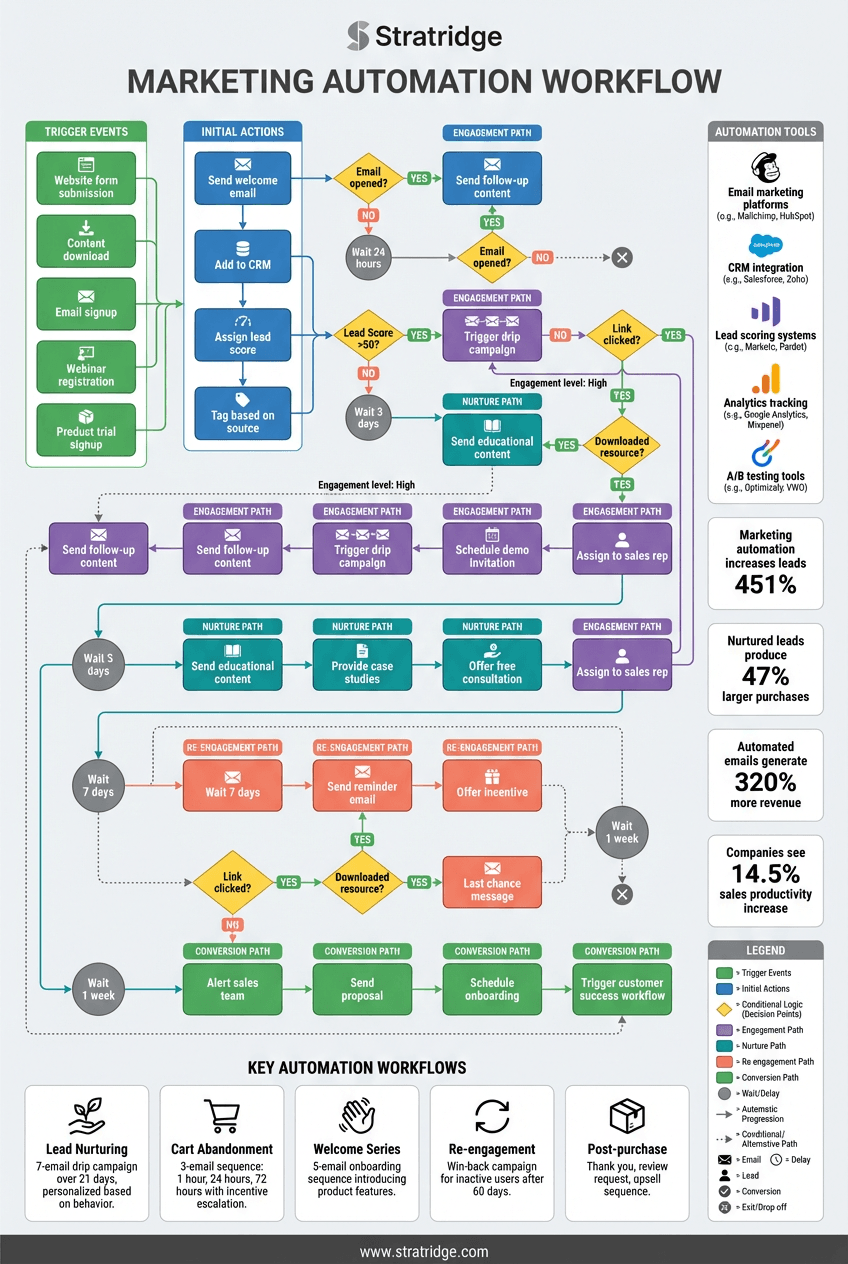
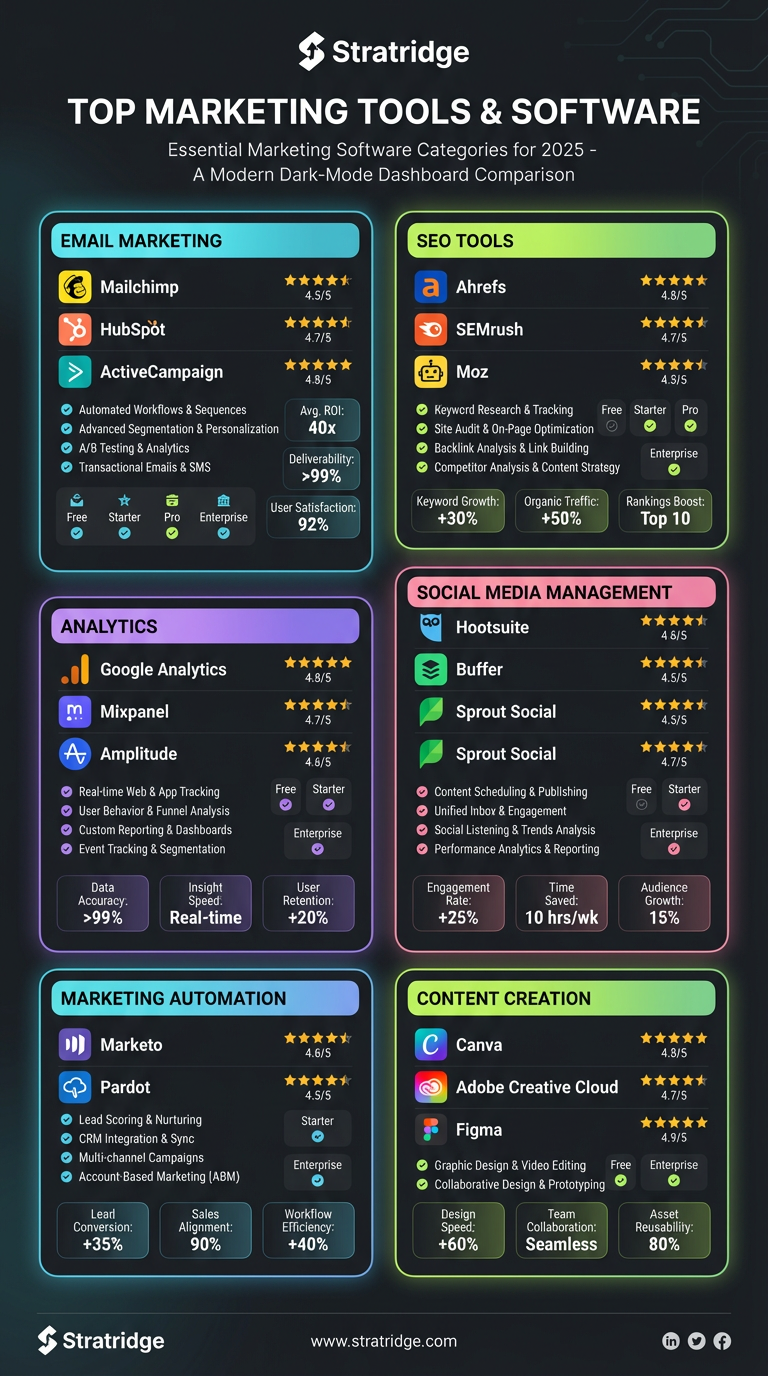
The five that earn their cost. First: a CRM that the sales team actually uses. One clean source of truth on deals, contacts, and activity. The tool matters less than the discipline; a pristine HubSpot beats a neglected Salesforce every time. Second: a marketing automation platform capable of email, segmentation, and basic lead scoring. Again, tool choice matters less than implementation rigor. Third: a CMS with decent SEO controls and a tolerable developer experience. Fourth: an analytics platform with event-level tracking (GA4 at minimum; most teams also need a product analytics tool like Mixpanel or Amplitude for the signed-in experience). Fifth: a single content collaboration tool where briefs, drafts, and calendars live — Notion, Asana, Airtable, doesn't matter, pick one and keep everything there.
Everything else is a conditional purchase. Buy when the need is specific and the pain is measurable.
The eight categories teams consistently over-buy on: ABM platforms (license one before you've validated a target account list with sales and you'll never use it), intent-data providers (noise-to-signal is worse than the demos suggest; trial before committing), attribution platforms (unless you're spending $5M+ across channels, the attribution signal is weaker than the tool's reporting implies), personalization engines (over-engineered for most teams' data maturity), chatbot platforms (if your forms aren't optimized, a chatbot won't save them), SEO tools beyond one comprehensive platform (redundant with enterprise tools and Search Console together), customer data platforms (most teams need a well-configured CRM, not a CDP, until they're running multi-channel orchestration at scale), and sales intelligence tools (the third one doesn't add what the first one didn't already give you).
The rule: every tool has a hidden cost beyond the invoice — implementation time, training, integration debt, and the half-life before it's forgotten. Subtract that from the pitched ROI before signing.
A quarterly stack audit — who uses what, how often, toward what outcome — tends to find 20-40% of spend that can be cut without operational loss.
Operations & Resources
This infographic is free. The audit is too.
Paste your URL and Stratridge returns an audit graded against the six dimensions and twenty-four factors — so you see where the story on your site lines up with the story this infographic describes, and where it doesn't.