Marketing Compliance and Ethics
Where the legal line actually is in 2025 — and the ethical line most teams cross without realizing.
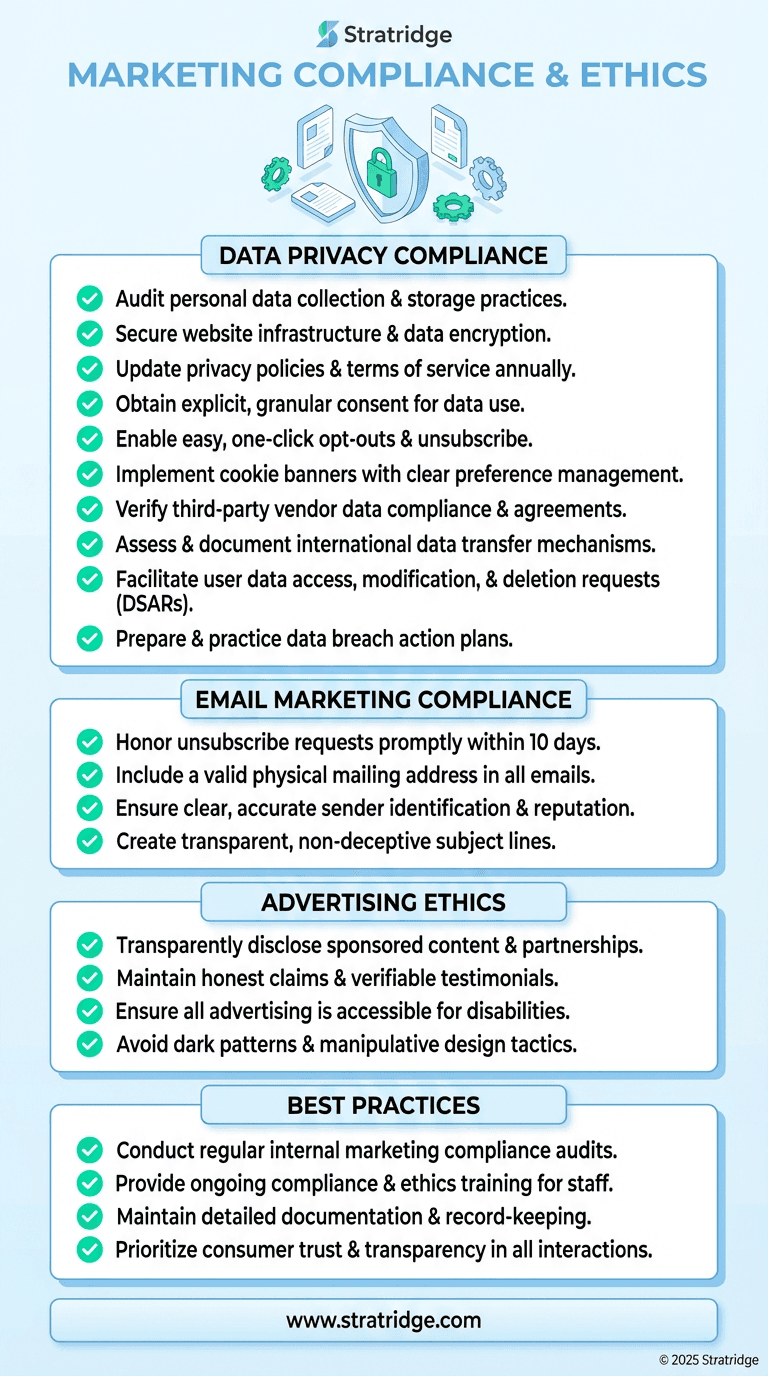
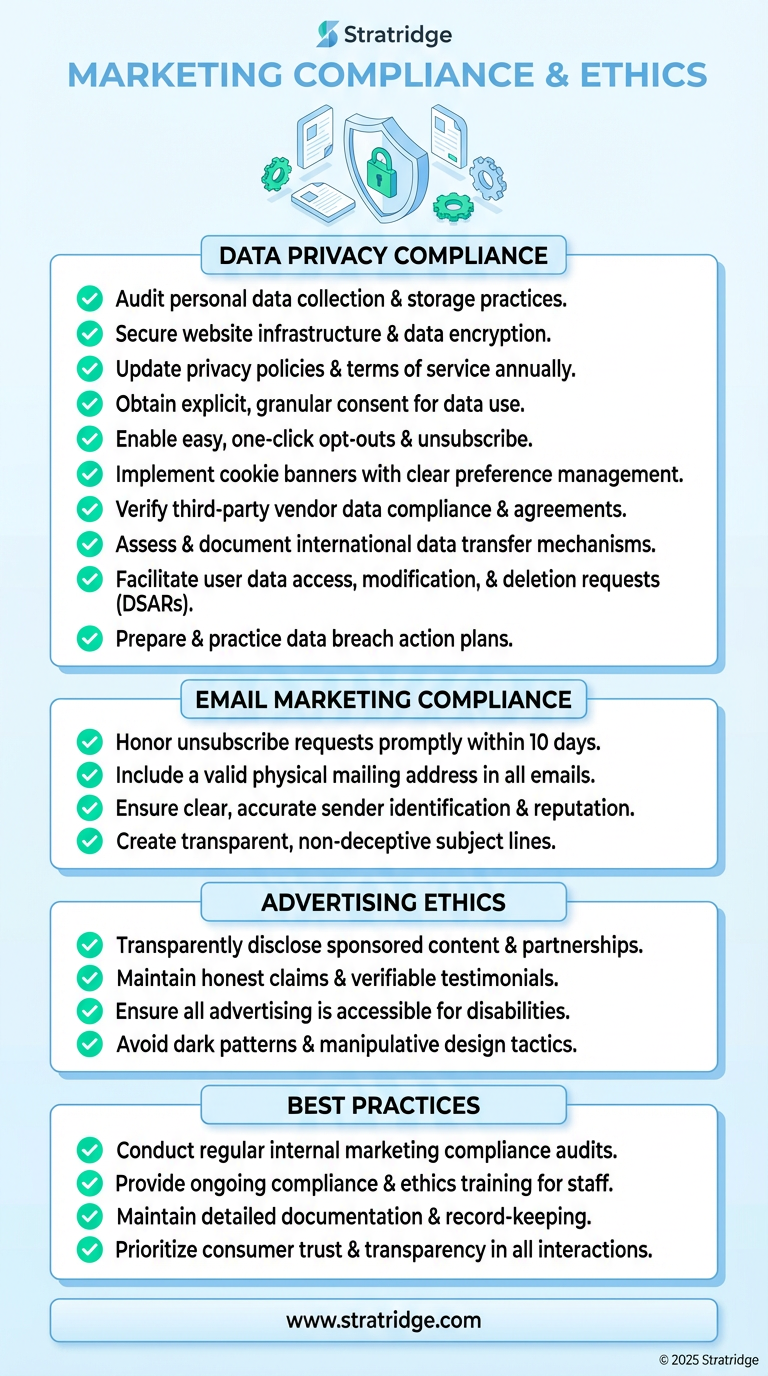
What this infographic is actually arguing.
Marketing compliance in 2025 is a genuinely more complex problem than it was five years ago. Privacy regulation has proliferated (GDPR, CCPA, CPRA, PIPL, LGPD, state-level US laws), enforcement has sharpened, and the ad ecosystem has changed underneath marketers' feet (third-party cookies, iOS tracking limitations, ATT framework). This infographic is the non-legal marketer's guide to where the line actually is — and the separate question of where the ethical line is.
The regulatory minimums. First: consent has to be actual consent. Pre-ticked boxes, buried opt-ins, and "by using our site you agree to tracking" language are not consent under GDPR or most newer US state laws. If your cookie banner doesn't offer a one-click reject with the same prominence as accept, you're non-compliant in much of the EU and an increasing number of US states.
Second: data subject requests work. Your company has to honor data access, deletion, and portability requests within a statutory window (usually 30 days). Many B2B marketing teams have never processed one end-to-end and would fail the request if tested.
Third: data you collect has to be data you use. Collecting fields you don't operationalize creates risk without benefit. The legal exposure on a breach scales with the volume and sensitivity of data held; the marketing utility scales with the data you actually use.
Fourth: email compliance. CAN-SPAM, CASL, and similar frameworks are older rules most teams think they're compliant with and are marginally violating. Unsubscribe must work within 10 business days, physical address must be in the footer, and the "from" line can't obscure identity.
The ethical line most teams cross without realizing is separate from the legal line and usually further away. Running dark-pattern consent flows that are legal but manipulative. Collecting behavioral data at one layer of granularity and using it at another (location plus professional title plus recent search history produces a profile most buyers would object to). Deploying AI-generated endorsements or testimonials. Using interactive "calculators" that are actually forms.
The useful test: would you describe your marketing practices truthfully to a buyer before the purchase? If the answer is no, you're over the ethical line regardless of the legal status.
Stratridge's AI Visibility tool includes a compliance check on your tracking setup.
Operations & Resources
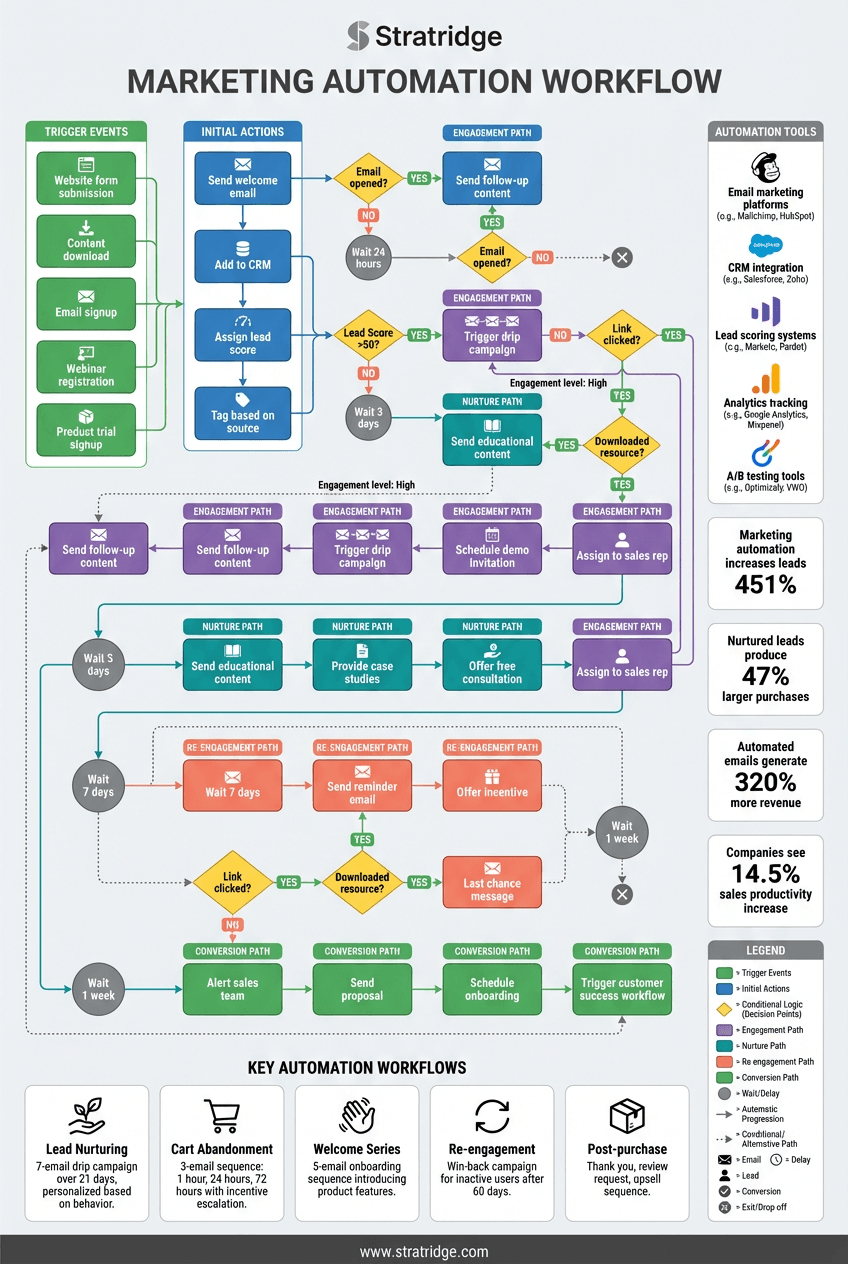
Marketing Budget Allocation
The 60/30/10 split that survives a recession — and the allocation that flatters your dashboard but starves next year.
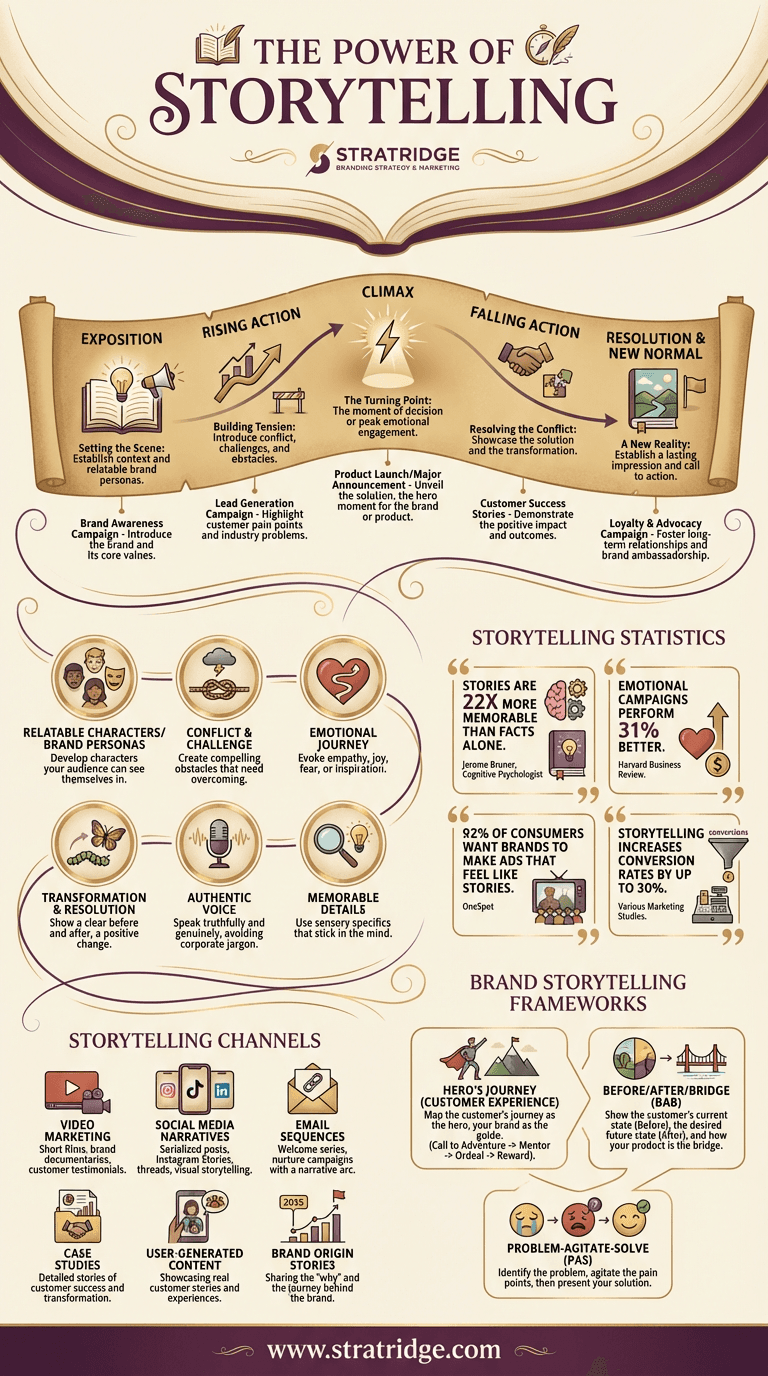
Global Marketing Challenges
What actually breaks when you go from one market to five — and the localization mistake that kills credibility.
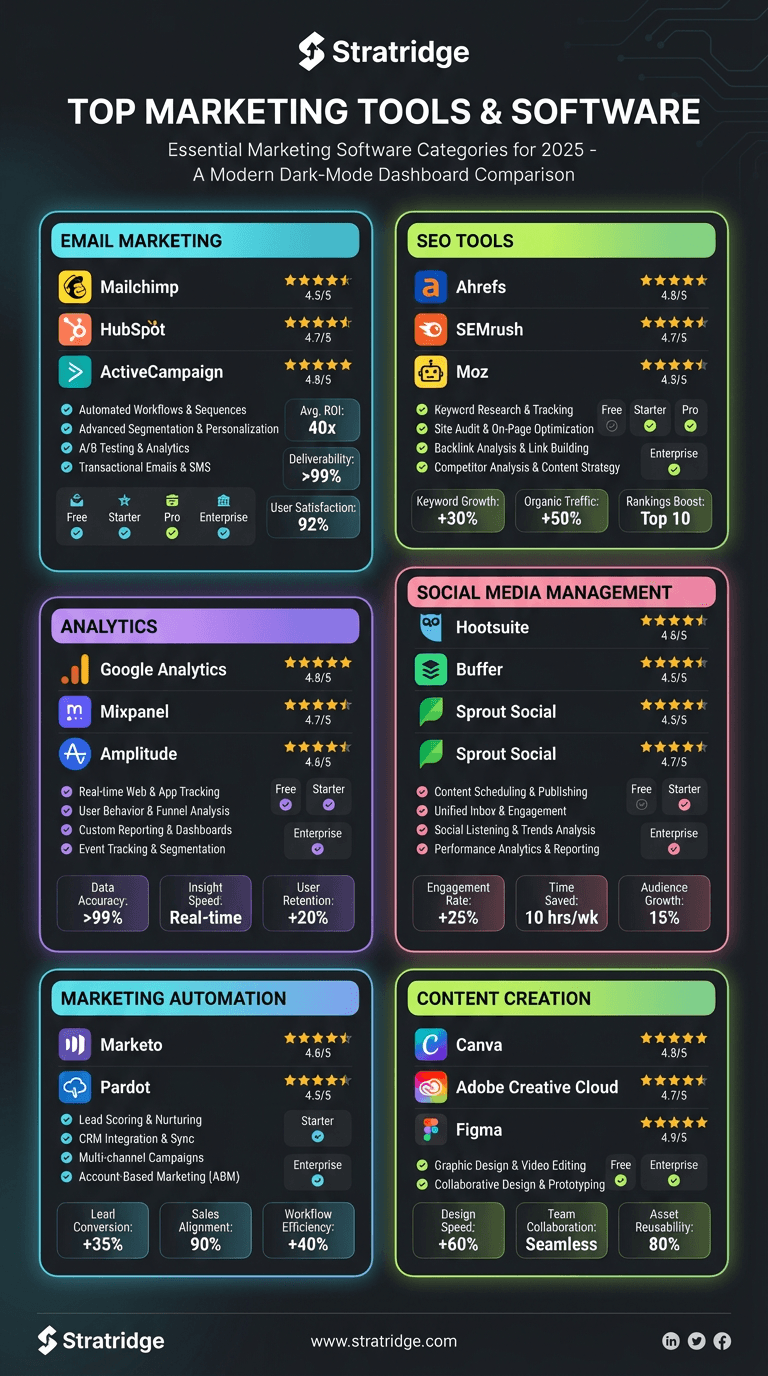
Top Marketing Tools and Software
The five tools most B2B stacks need — and the eight every team over-buys on.
This infographic is free. The audit is too.
Paste your URL and Stratridge returns an audit graded against the six dimensions and twenty-four factors — so you see where the story on your site lines up with the story this infographic describes, and where it doesn't.