The Power of Storytelling
What "storytelling" actually means in B2B — and the three structures that outperform the generic "brand story".
What this infographic is actually arguing.
"Brand storytelling" is one of marketing's most-abused phrases. In most uses it means "write some feelings around your features and hope the reader cares." Real storytelling is a craft discipline with specific structural moves, and the structures that work in B2B are not the ones consumer brand books teach. This infographic covers what storytelling actually means for a company selling to a committee buyer.
The first truth: B2B buyers aren't reading your story. They're trying to solve a problem, and your story is either a shortcut to understanding your relevance or an obstacle between them and the answer. The question isn't "what's our story?" — it's "what story helps this specific buyer make this specific decision faster?" The self-indulgent founder-journey story fails that test most of the time.
The three structures that work in B2B. First: the customer-as-hero story. Structure a case study so the customer is the protagonist, the problem is the antagonist, and your product is the tool that made the resolution possible. The customer's outcome is the payoff. This is the oldest structure in business writing and still the most effective because the reader sees themselves in the hero, not in you.
Second: the category-reframe story. Name the old way of doing something, name its limitations in language the buyer already uses, and propose the new way — with your product as the concrete implementation. This is how categories get created. The structure works because it gives the buyer a lens for understanding their problem before offering a solution.
Third: the why-now story. For any buyer considering change, the hardest question is "why this year rather than next." A why-now story names the specific shift — technology, regulation, market dynamic — that makes inaction expensive. This is load-bearing for products that compete with status quo more than with named alternatives.
The structure that reliably fails: the generic "our journey" story. Founded in a garage, hit an obstacle, persevered, here we are. Buyers read this as filler because it is. It tells them nothing about whether you can help them.
The craft move under all three working structures: specificity. Names, numbers, dates, verbs. Generic stories are aspirational; specific stories are credible. Stratridge's Copy Studio drafts in your voice and pressure-tests for the generic-story failure mode.
Foundational Marketing
The Marketing Funnel Explained
The five funnel stages, what each one actually moves, and where most B2B teams leak.
SEO Best Practices
On-page, technical, and off-page fundamentals — the SEO checklist that still compounds.
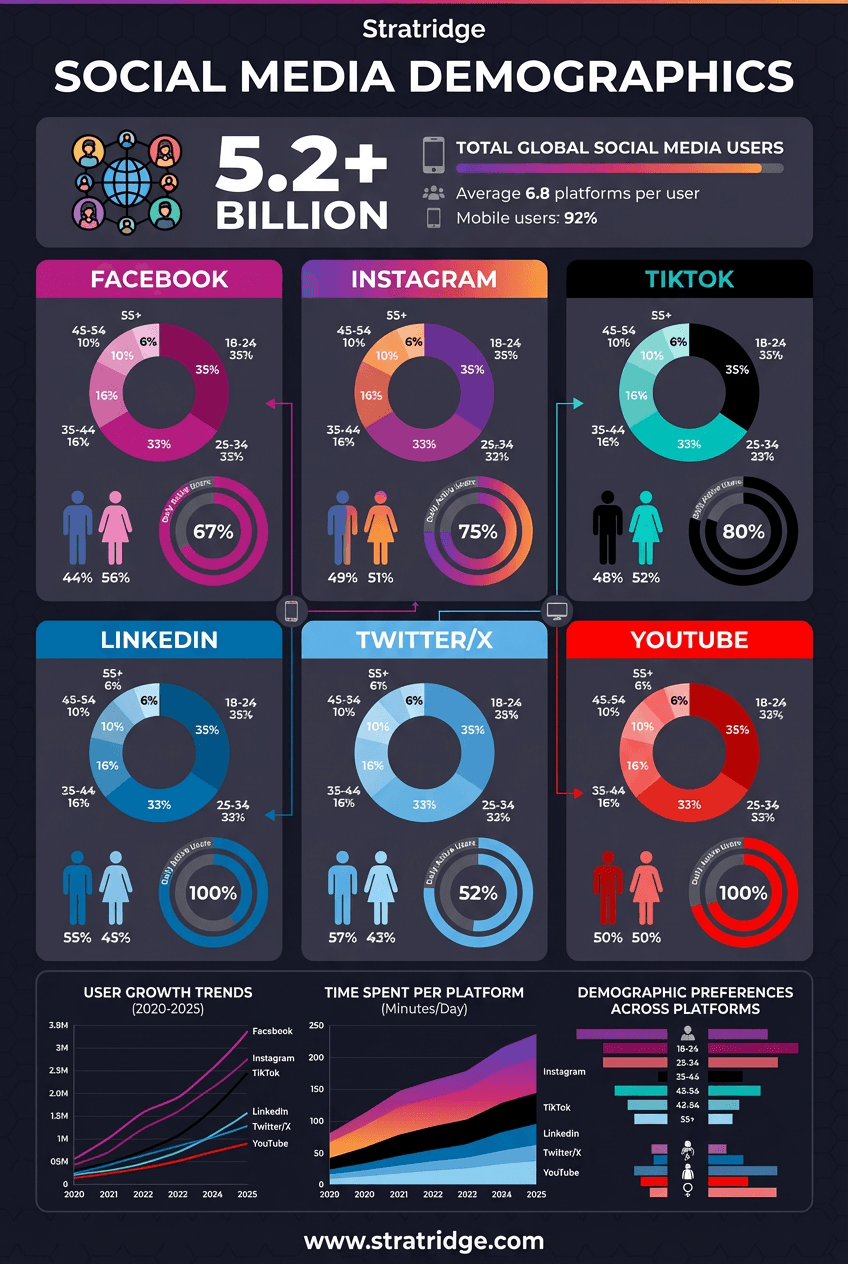
Social Media Demographics
Who is actually on each platform in 2025 — and the decision it forces on your channel mix.
This infographic is free. The audit is too.
Paste your URL and Stratridge returns an audit graded against the six dimensions and twenty-four factors — so you see where the story on your site lines up with the story this infographic describes, and where it doesn't.