Effective Call-to-Action Design
The two-word test that predicts CTA performance better than any color or placement study.
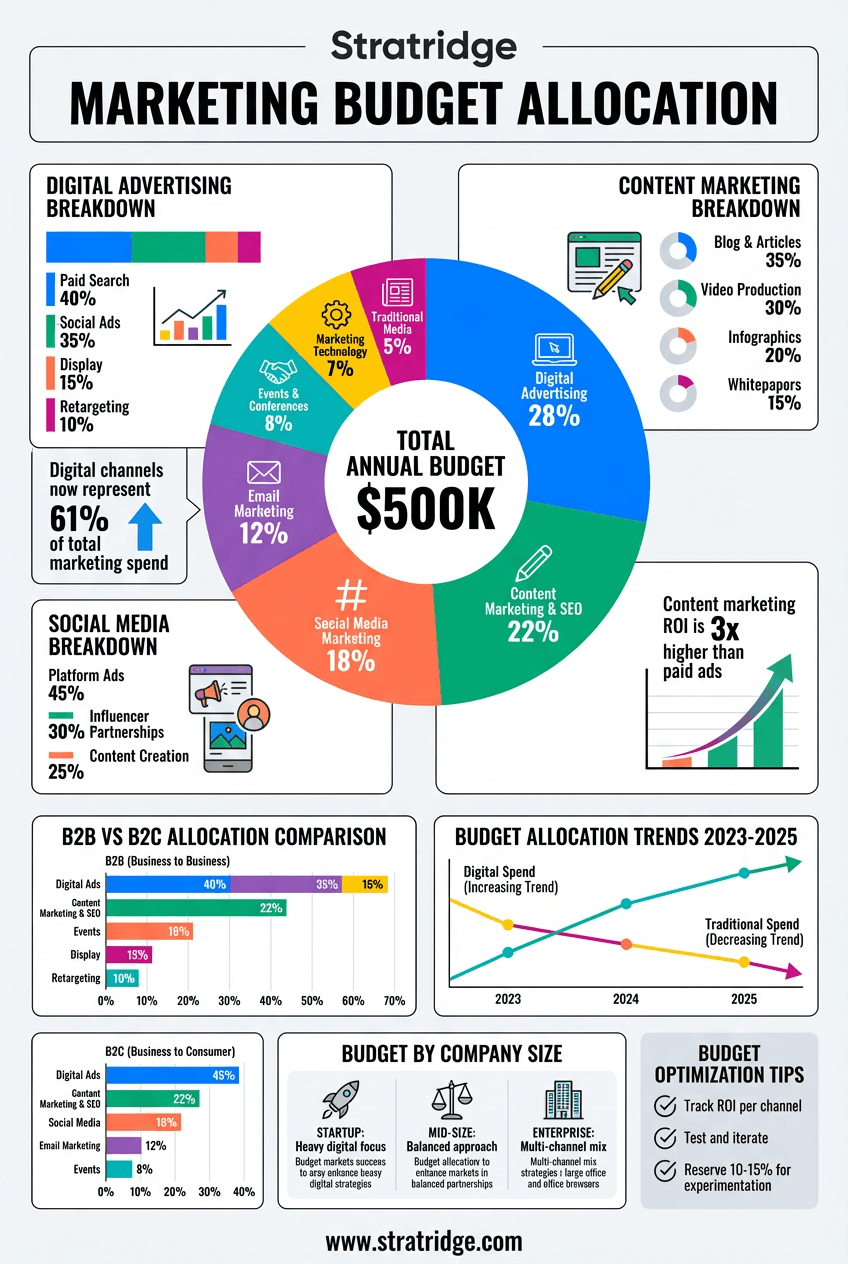
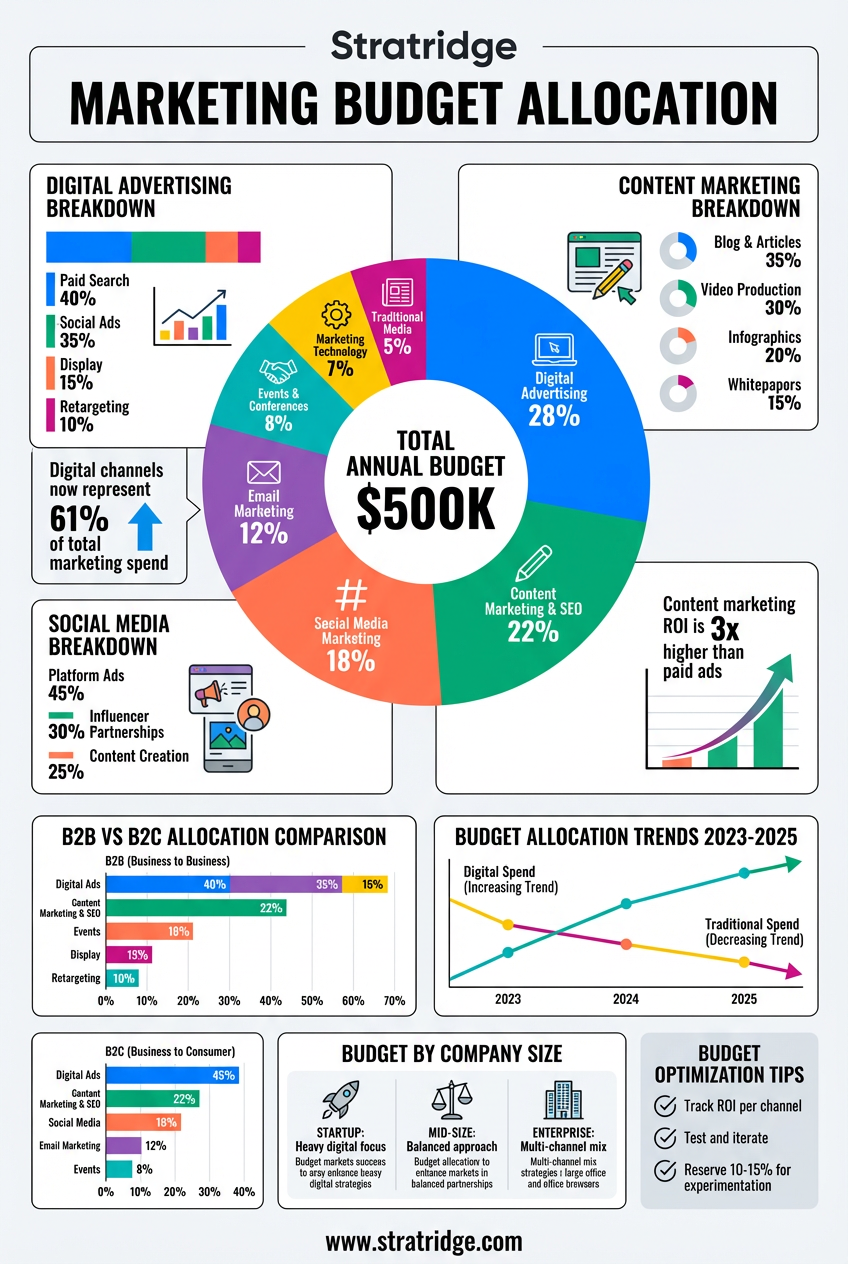
What this infographic is actually arguing.
Call-to-action optimization collects more A/B testing attention per square pixel than any other element of a marketing site, and most of that attention is aimed at the wrong layer. Teams test button color, button placement, and verb choice — micro-optimizations that produce statistically significant results on underlying strategies that are wrong.
This infographic covers CTA design as a layered problem. The bottom layer is the verb. "Get started" converts worse than "Start your free audit" because the latter tells the buyer what they'll get, not what they should do. Specific beats generic every time. The verb should name the thing on the other side of the click, not describe an abstract action.
The middle layer is the micro-copy around the button. Reassurance copy ("No credit card required," "Takes 90 seconds," "Results emailed instantly") often lifts conversion more than the button itself. Buyers click when they believe the next step is low-risk and bounded. Show them that.
The top layer — and the one most teams skip — is the value promise the button is attached to. The best button copy in the world can't save a CTA that asks for commitment before delivering value. If the page has established why the reader should care and what they'll get, the button is almost clerical. If it hasn't, no button copy recovers it.
The two-word test that predicts CTA performance better than any color study: can you complete the sentence "When I click this button, I will get ___" in five specific words? "Get a quote" fails — get what, for what, by when. "See your site's positioning score" passes — it names the output, the scope, and implicitly the time.
Button placement matters less than people think. Buyers who want to act will find the button. Buyers who don't want to act won't click it twelve times just because you put it in twelve places. Use one primary CTA per page, reinforced in the natural reading flow, and resist the urge to sprinkle.
Test the strategy layer before the tactical one. Testing button colors while the value promise is weak is the marketing equivalent of polishing doorknobs in a house with no front door.
Conversion & Engagement
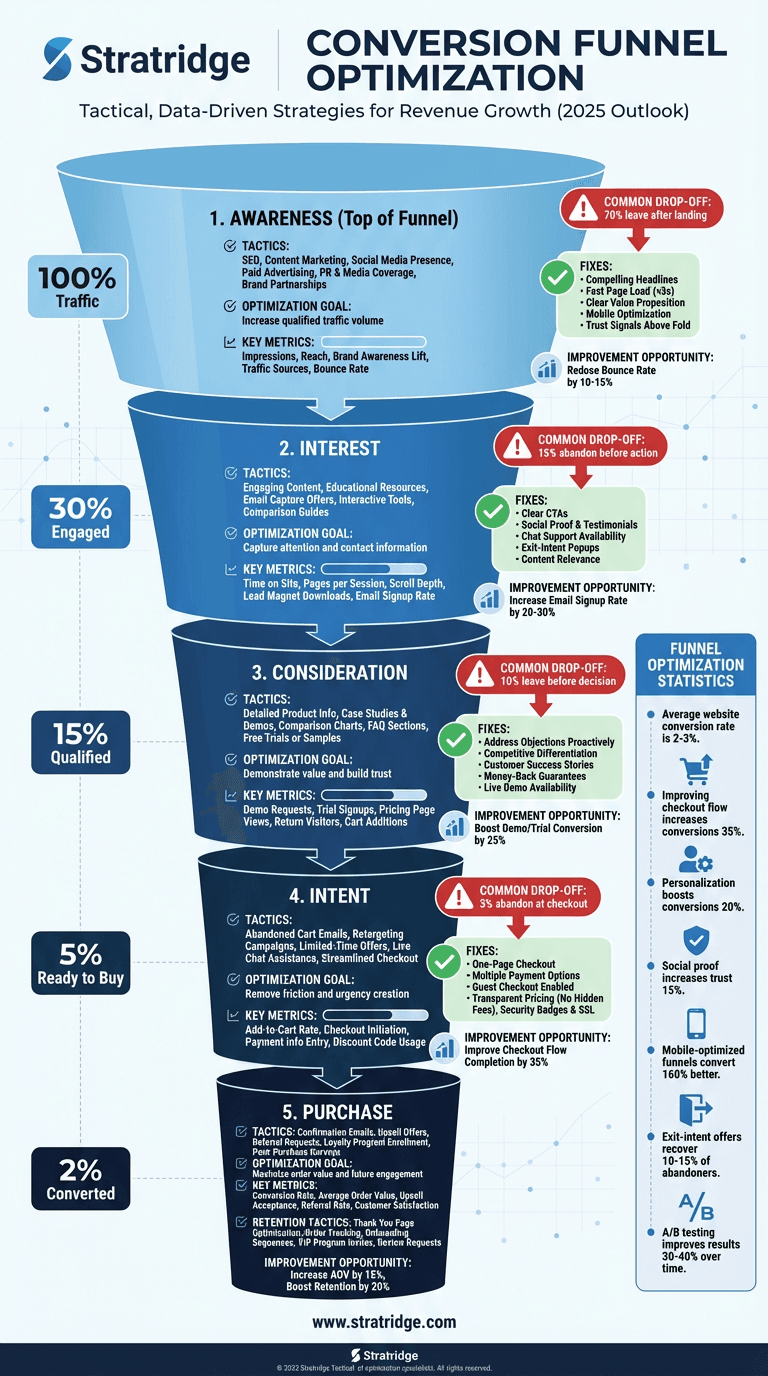
Conversion Funnel Optimization
Where funnels actually break — and the order of operations for fixing them without rebuilding the whole thing.
Anatomy of a Perfect Landing Page
Seven sections that actually do work — and why most landing page templates ship with three too many.
The Power of Personalization
Personalization that converts versus personalization that creeps — and the data minimum each one requires.
This infographic is free. The audit is too.
Paste your URL and Stratridge returns an audit graded against the six dimensions and twenty-four factors — so you see where the story on your site lines up with the story this infographic describes, and where it doesn't.