Conversion Funnel Optimization
Where funnels actually break — and the order of operations for fixing them without rebuilding the whole thing.
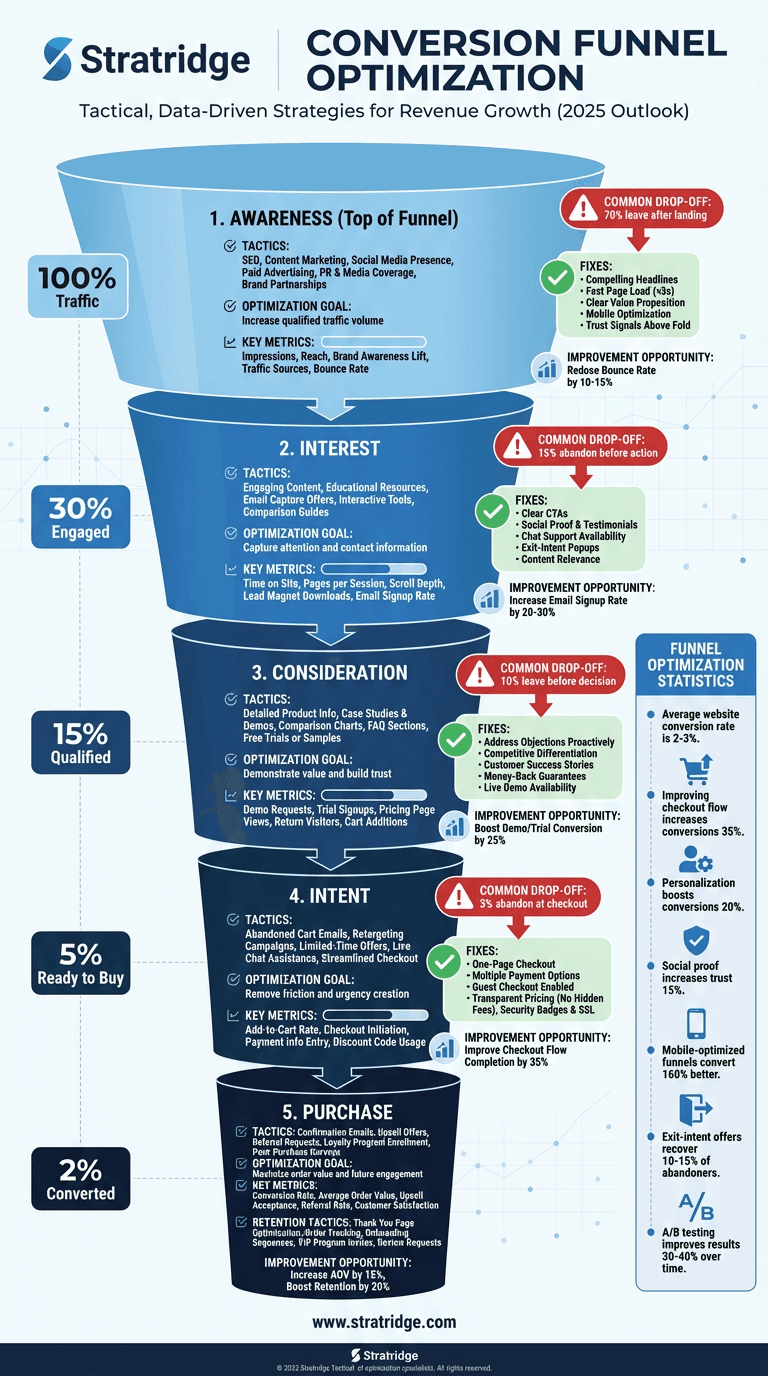
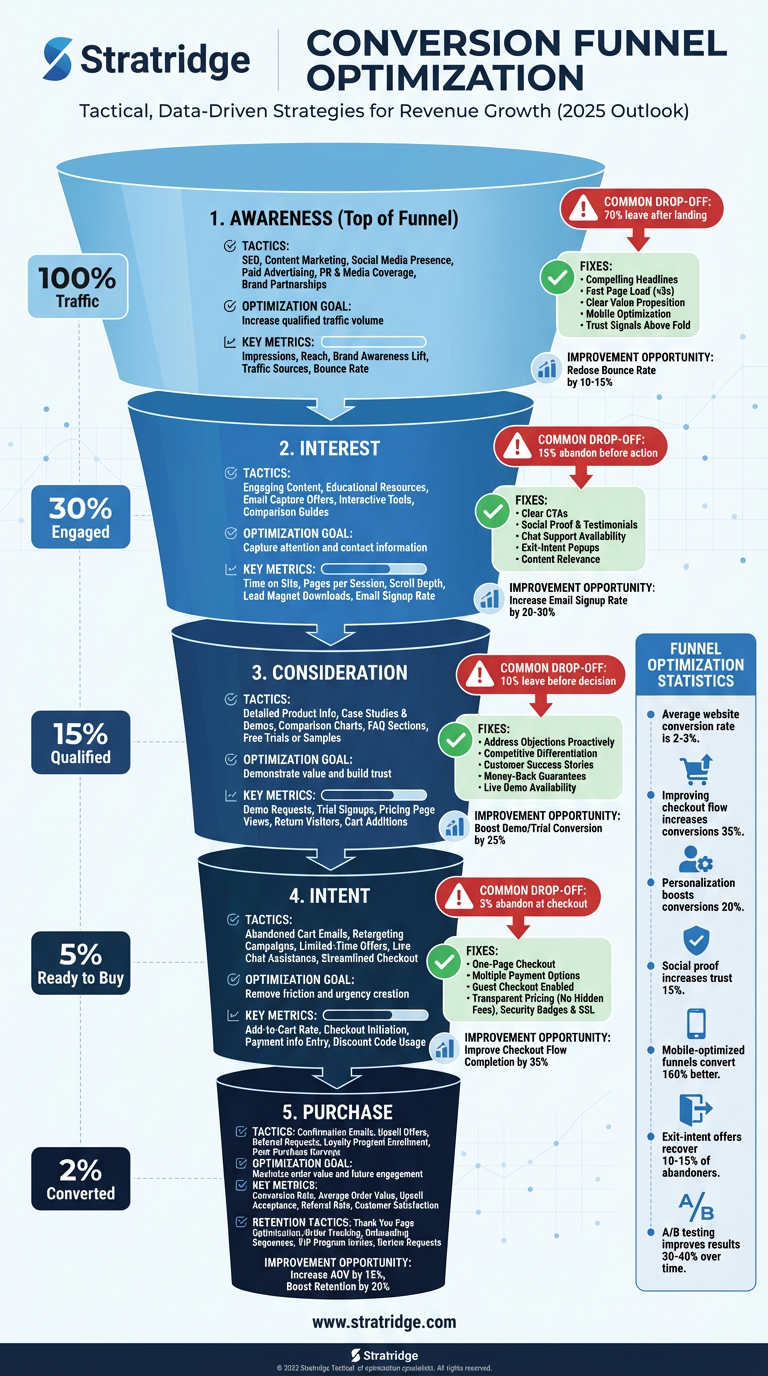
What this infographic is actually arguing.
Conversion funnel optimization is usually taught wrong. The standard advice — run A/B tests on every page, optimize micro-conversions, reduce friction everywhere — treats the funnel as a series of independent steps to perfect. In practice, funnels break at specific, diagnosable joints, and fixing them in the wrong order wastes most of the effort.
This infographic maps the five most common funnel breaks and the order of operations for working through them. First: the top-of-funnel mismatch, where the ad or organic landing doesn't match the page promise. No downstream optimization recovers this one — a page optimized for a keyword the buyer isn't using won't convert no matter how good the button copy is. Check alignment between query, ad, and landing page before touching anything else.
Second: the hero-to-below-fold gap. Most B2B sites get the hero right and lose the reader in the second screen. Scroll tracking will show you the fall-off; the fix is usually ruthless trimming, not more content. Below the fold belongs to the buyer who is genuinely interested — not the buyer you're still trying to convince.
Third: the social-proof gap. Buyers at mid-funnel want evidence and get testimonials. Testimonials are worst-case social proof: generic, unverifiable, and clearly curated. Replace with named logos, specific outcome quotes, and third-party validation where possible.
Fourth: the form friction point. Every field costs conversion. The fields you keep should pay their rent in sales-qualification value. If marketing doesn't use a field, cut it. If sales uses it once a month, cut it.
Fifth: the post-submit black hole. Buyers who fill a form and then wait 48 hours for a reply are converting to a competitor, not waiting patiently. Automated response within five minutes, human response within one business day, and clear next-step language in both.
Fix these in order. Running A/B tests on button copy while the hero mismatches the ad is noise — you'll find statistical significance on improvements that don't matter. Stratridge's Positioning Audit pressure-tests the top of the funnel; the Conversion Audit catches the downstream breaks.
Conversion & Engagement
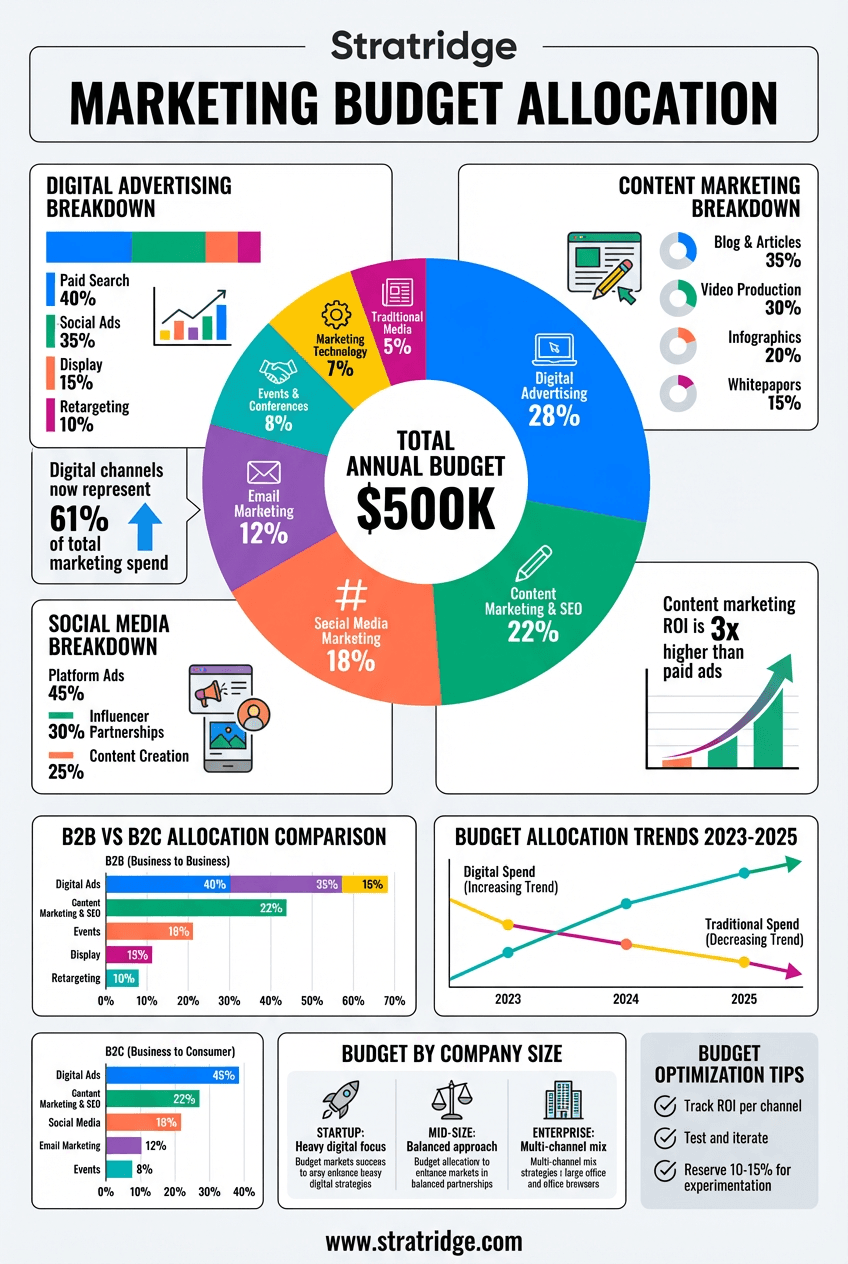
Effective Call-to-Action Design
The two-word test that predicts CTA performance better than any color or placement study.
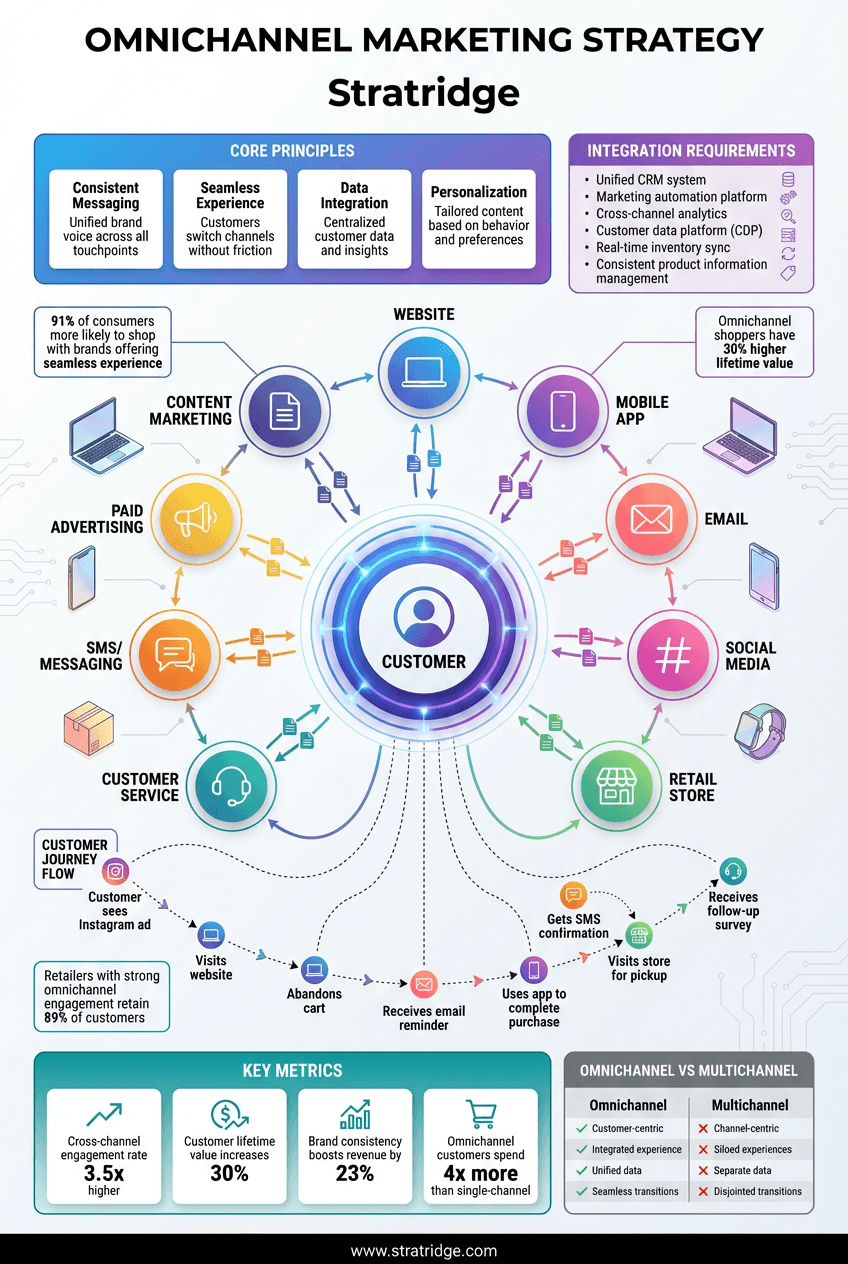
Anatomy of a Perfect Landing Page
Seven sections that actually do work — and why most landing page templates ship with three too many.
The Power of Personalization
Personalization that converts versus personalization that creeps — and the data minimum each one requires.
This infographic is free. The audit is too.
Paste your URL and Stratridge returns an audit graded against the six dimensions and twenty-four factors — so you see where the story on your site lines up with the story this infographic describes, and where it doesn't.