The Power of Personalization
Personalization that converts versus personalization that creeps — and the data minimum each one requires.
What this infographic is actually arguing.
Personalization is one of the most-promised and least-delivered capabilities in B2B marketing. Every platform sells it; most teams implement it at the "Hi {firstname}" level and wonder why the lift isn't showing up. The real personalization moves are either much smaller or much larger than the merge-field version, and the ones in the middle usually feel creepy to the buyer without producing proportional conversion gains.
This infographic covers the two kinds of personalization that work in B2B. The small version is segment-aware content: the same page, adapted for industry, company size, or role. Not a full page rewrite — a hero variant, a case-study swap, a CTA that names the persona. This is high-ROI because it matches the buyer's mental model ("this is for me") without requiring invasive data. Most mid-market B2B companies can implement this with reverse-IP lookup and don't.
The large version is fully-dynamic account-based personalization: the homepage shows company-specific content, the nav adapts, the sales outreach references the recent content consumption. This works for enterprise ABM programs and is over-kill for everything else. The creepy-factor goes up sharply when personalization knows more than the buyer volunteered.
The middle tier — using behavioral data to fire personalized-feeling emails — is where most programs land and most dissatisfaction lives. The reason: the signal-to-noise ratio is bad. You can track pricing-page visits, but you can't tell from the signal whether the visitor is the buyer, a competitor, or a job-seeker. Firing personalized outreach at all three produces terrible conversion and uncomfortable moments with the two-thirds who weren't buyers.
The data minimum changes by tier. Segment personalization needs industry + company size + role — all of which can be inferred or captured in-form without friction. Account-level personalization needs firmographic + engagement data, which requires tooling investment and first-party data discipline. Behavioral nurture needs clean event tracking, which most CRM/MAP stacks don't actually have despite what the marketer thinks.
The rule of personalization: it's only as valuable as the claim it's decorating. Personalizing a weak message makes it a weak message for a specific person. Get the claim right first; personalize second.
Conversion & Engagement
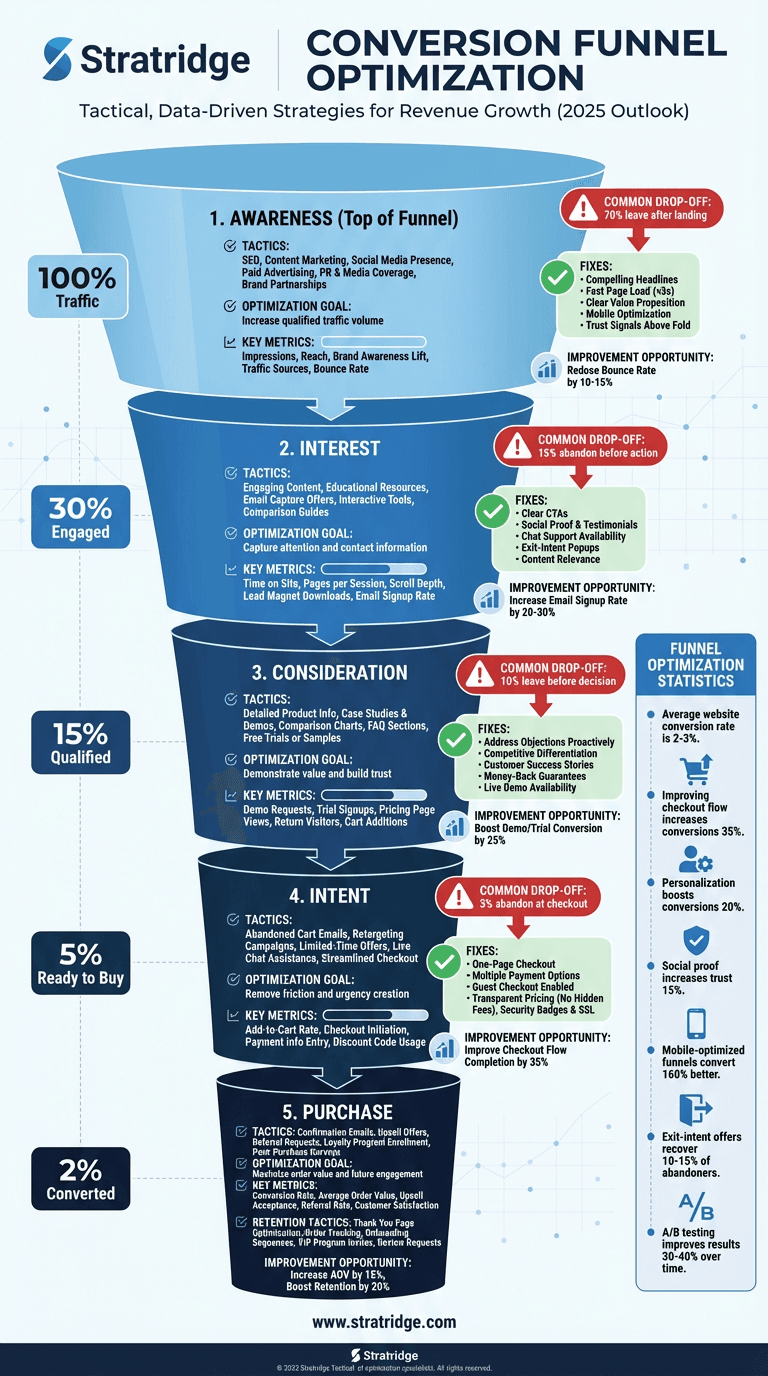
Conversion Funnel Optimization
Where funnels actually break — and the order of operations for fixing them without rebuilding the whole thing.
Effective Call-to-Action Design
The two-word test that predicts CTA performance better than any color or placement study.
Anatomy of a Perfect Landing Page
Seven sections that actually do work — and why most landing page templates ship with three too many.
This infographic is free. The audit is too.
Paste your URL and Stratridge returns an audit graded against the six dimensions and twenty-four factors — so you see where the story on your site lines up with the story this infographic describes, and where it doesn't.