In today's hyper-competitive B2B SaaS landscape, simply having a great product is no longer enough. The real challenge for CMOs isn't just selling a solution, but defining the very problem it solves in a way that creates a new market space. This isn't about incremental innovation; it's about category design – the strategic discipline of shaping customer perception, building an ecosystem, and ultimately, owning a new segment of the market. Without a clear category, even the most innovative SaaS offerings risk being commoditized, lost in a sea of similar-sounding competitors, or worse, misunderstood entirely. This 18-month playbook provides a structured approach to navigate this complex, high-stakes endeavor.
Month 1-3: Foundation & Vision – Defining Your Category
The initial phase of category design is about deep introspection and market analysis. It's where you articulate the 'why' behind your new category and lay the intellectual groundwork. This isn't just about product features; it's about a new way of thinking, a new problem definition, and a new solution paradigm.
Identifying the White Space
Before you can design a category, you must identify the unmet need or unarticulated problem that your solution uniquely addresses. This requires moving beyond existing market definitions and looking for structural shifts in customer behavior, technology, or business models.
This shift means your category must resonate with how buyers articulate their challenges, not just how you describe your product.
Crafting the Point of View (POV)
Your POV is the intellectual core of your category. It's a provocative statement that challenges the status quo, redefines the problem, and positions your solution as the inevitable answer. A strong POV isn't just marketing copy; it's a strategic framework that guides product development, sales messaging, and investor relations.
Naming Your Category
The name of your category is its flag. It must be memorable, descriptive, and defensible. Avoid generic terms that could apply to competitors. Aim for a name that evokes the new problem and solution, and ideally, allows for future expansion.
Category Naming Checklist
Month 4-9: Building the Ecosystem – Evangelism & Thought Leadership
Once the foundational elements are in place, the next phase is about bringing your category to life through external validation and ecosystem development. This involves strategic content creation, analyst relations, and fostering a community around your new idea.
Content Strategy for Category Creation
Your content isn't just about lead generation; it's about educating the market on the new problem and the new solution. This requires a shift from product-centric content to category-centric thought leadership. Focus on whitepapers, research reports, and long-form articles that articulate the POV and demonstrate the need for the new category.
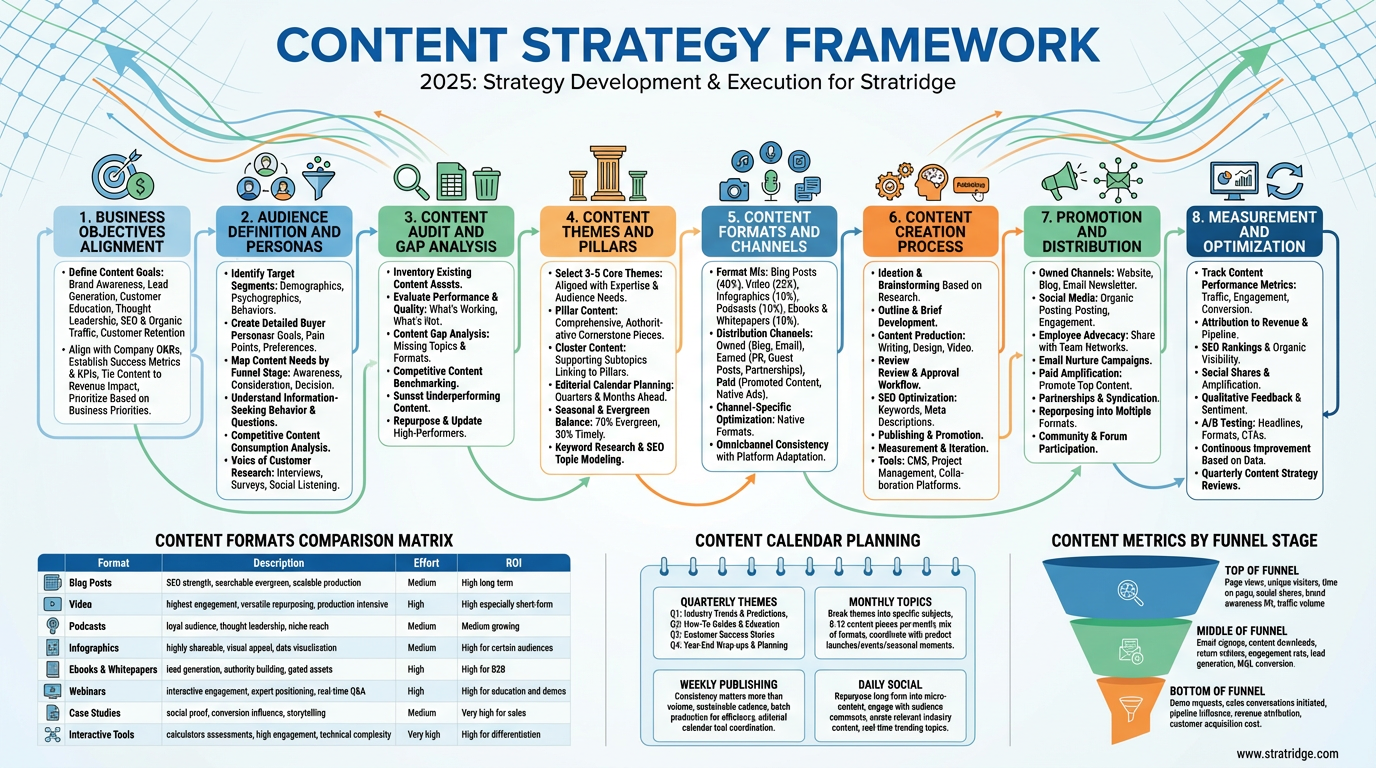
This framework emphasizes the need for content that addresses each stage of the buyer's journey within the context of your new category, from problem awareness to solution adoption.
Engaging Industry Analysts & Influencers
Analysts and influencers are critical validators for a new category. Develop a targeted outreach strategy to educate them on your POV, share your research, and secure their endorsement. Their reports and recommendations can significantly accelerate market adoption.
Fostering a Community of Early Adopters
True category creation involves building a movement. Identify and engage early adopters who are experiencing the problem your category addresses. Create forums, events, or user groups where they can connect, share experiences, and become advocates for the new way of thinking.
Month 10-18: Market Dominance – PR/AR & Scaling Adoption
The final phase is about solidifying your category leadership and scaling adoption. This involves a sustained public relations and analyst relations push, strategic partnerships, and continuously refining your message based on market feedback.
Strategic Public Relations (PR) & Analyst Relations (AR)
This is where you make your category a household name within your target market. Secure media coverage that frames your company as the leader and innovator in this new space. Leverage analyst reports and quotes to reinforce your position.
This shift in focus is crucial for moving beyond product-level competition to category-level leadership. For more on competitive differentiation, see Competitive Differentiation When Product is Mostly the Same.
Strategic Partnerships & Alliances
Look for opportunities to partner with complementary solutions or industry bodies that can help validate and expand your category. These alliances can provide access to new audiences, integrate your solution into broader workflows, and lend credibility to your new market definition.
Continuous Feedback & Iteration
Category design is not a one-time event; it's an ongoing process. Continuously monitor market feedback, competitive responses, and customer adoption. Be prepared to refine your messaging, evolve your POV, and even adjust your category definition as the market matures. A complete positioning audit can be invaluable here.
Measuring Category Momentum
Beyond traditional marketing metrics, track indicators of category adoption: search volume for your category term, analyst report inclusion, competitor attempts to enter your defined space, and the increasing use of your category language by customers and partners.
This demonstrates the significant financial upside of successful category design.
Conclusion: Owning the Future
Category design is arguably the most powerful growth strategy for B2B SaaS companies seeking to escape commoditization and achieve exponential growth. It demands courage, foresight, and a disciplined, long-term commitment. By meticulously defining a new problem, articulating a compelling POV, building a supportive ecosystem, and executing a strategic PR/AR plan, CMOs can not only launch a new product but also own the future of an entire market segment. This playbook provides the roadmap; the execution is now in your hands.
Stratridge provides the intelligence and frameworks to help B2B SaaS leaders navigate these complex strategic challenges. Our platform offers deep insights into market positioning, competitive differentiation, and go-to-market strategies, empowering you to not just compete, but to define and dominate your category.
Keep reading
The Positioning Pivot: When to Change Your Category Entirely
Most positioning problems can be solved with a refresh. A small minority require a pivot — changing the category itself. Here's the five signals that tell you which you're facing, and the 12-month execution plan when pivot is the answer.
Competitive Differentiation When Your Product Is Mostly the Same
Product parity is the norm in mature categories, not the exception. The teams that win from parity do it on four differentiator types that aren't in the product — and they name which one on purpose.
When to Refresh Your Positioning (Not Just Your Messaging)
How to tell whether the problem is positioning or execution — the four signals that mean the thesis is wrong, not the copy.
Launch Playbook
Ship launches that land a point of view — not just a feature list.
Launch Playbook drafts your announcement copy, FAQ, and battle-card patch from your Strategic Context the moment you're ready to ship. Evidence-based, grounded in your positioning, built to be sent — not just presented.
- ✓Drafts announcement, FAQ, and battle-card patch
- ✓Built on your positioning, not a generic template
- ✓Ready to ship in the time it takes to brief an agency