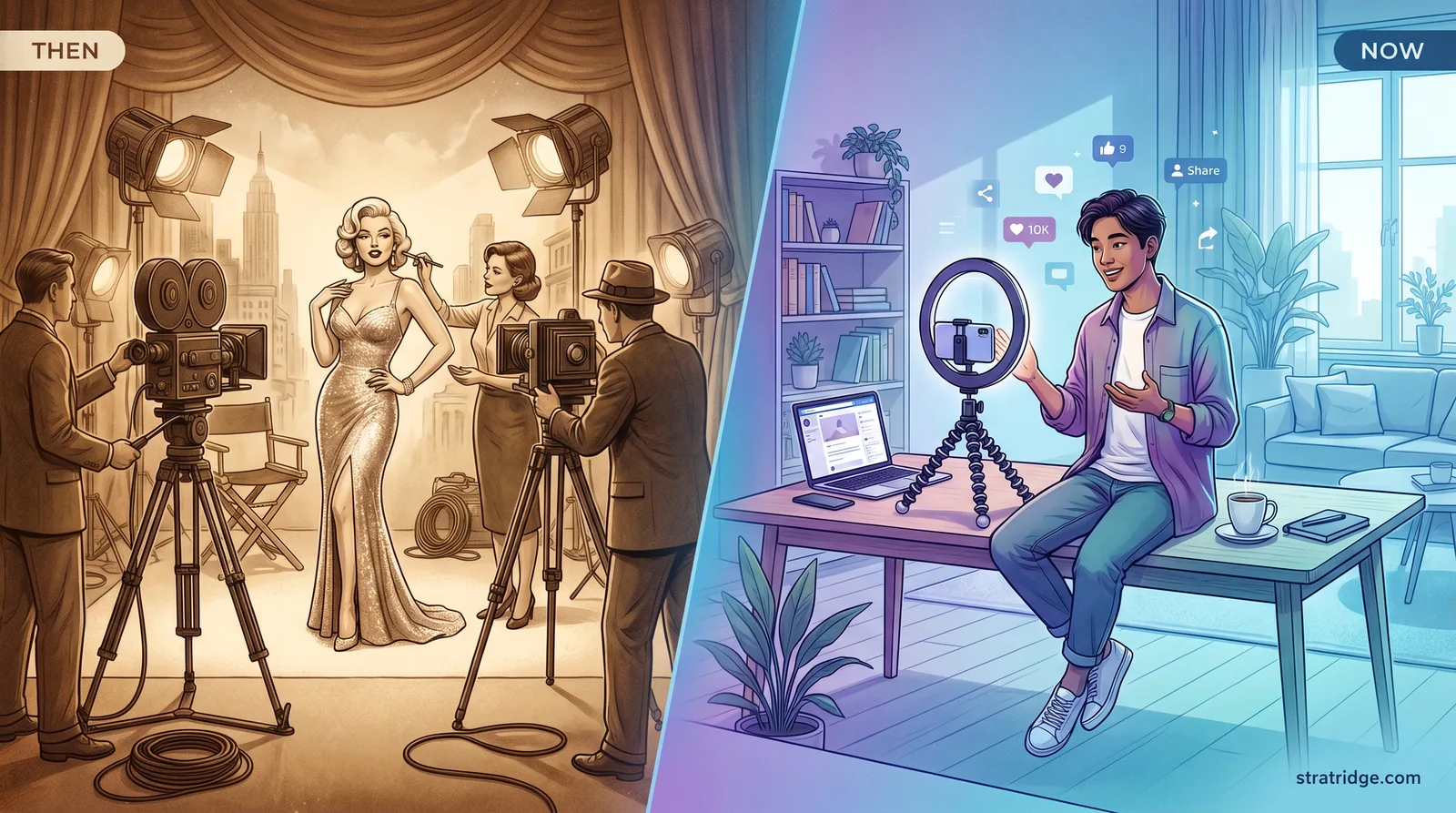
From celebrity endorsements to micro-influencers
Key contrasts
- Star Power → Authentic Advocacy. The move from high-profile celebrities to micro-influencers who offer authenticity and relatable content.
- Mass Appeal → Niche Engagement. Shifting focus from broad-reach celebrity endorsements to targeted engagement with niche audiences.
- High Costs → Cost-Effective Collaborations. Celebrity endorsements came with premium price tags; micro-influencers offer far more budget-friendly partnerships.
- Scripted → Genuine Recommendations. The transition from polished, scripted endorsements to candid, personal recommendations by everyday creators.
- Limited Interaction → Active Engagement. Celebrities had limited interaction with audiences; micro-influencers actively engage with their followers daily.
- One-Time Deals → Long-Term Relationships. Moving from one-off celebrity campaigns to sustained, long-term collaborations with influencers.
- Broad Messaging → Tailored Content. Celebrities conveyed broad brand messages; micro-influencers create content tailored to their specific community.
- Aspirational → Relatable Influence. The evolution from aspirational celebrity endorsement to trustworthy, relatable influence by creators audiences know.
Why trust beat star power
Influencer marketing has undergone one of the most dramatic reinventions in modern advertising. For decades, brands relied on the gravitational pull of celebrity — the assumption that a famous face could move product simply by association. A Hollywood star holding a soft drink, an athlete wearing a shoe, a pop icon spraying a perfume: these were the currencies of consumer persuasion.
That model began to fracture as audiences grew more skeptical of polished, transactional endorsements. The rise of social media created a new class of creator: the micro-influencer. These individuals build followings of a few thousand to a few hundred thousand around genuine passion for a topic — fitness, cooking, travel, finance, parenting. Their audiences are smaller but far more engaged, and crucially, they trust what these creators say.
The shift has reshaped marketing budgets and strategy alike. Brands now allocate spend across dozens or even hundreds of micro-influencer partnerships rather than a single celebrity deal. The result is content that feels native to the platform, resonates with specific communities, and drives measurable action. Authenticity has become the new star power.
What makes this evolution so significant is not just the change in who delivers the message, but how the relationship between brand and audience has transformed. Influencer marketing today is less about broadcasting and more about belonging — connecting brands to communities through voices those communities already trust.
Influencer marketing has transformed from celebrity-centric to micro-influencer driven, prioritizing authenticity, niche appeal, and deeper audience connections.
Keep reading
Then & Now: The Evolution of Advertising Channels
From print and broadcast to programmatic and streaming — how the ad channel map fragmented, and what precision targeting actually changed.
Then & Now: The Transformation of Customer Data
From paper records to real-time AI-driven intelligence — how customer data evolved from filing cabinet to predictive engine.
Then & Now: The Transformation of Market Research
From focus groups and surveys to real-time social intelligence — how market research traded scheduled studies for continuous signal.