In the dynamic landscape of B2B SaaS, a company's positioning is its North Star. Yet, as organizations scale, product lines expand, and marketing campaigns proliferate, that star often begins to drift. The initial clarity that propelled early growth can become diluted, leading to inconsistent messaging, confused sales teams, and ultimately, a weakened market presence. This isn't a failure of individual effort, but often a systemic breakdown in how positioning is governed and maintained. The solution isn't more meetings, but a dedicated, cross-functional body designed to act as the guardian of your strategic narrative: the Positioning Council.
Why a Positioning Council Isn't Just Another Committee
Many B2B SaaS companies struggle with maintaining a coherent market message. Product teams innovate, sales teams adapt to immediate market feedback, and marketing teams launch campaigns, each with good intentions but sometimes diverging interpretations of the core value proposition. This fragmentation erodes market confidence and makes it harder to penetrate new segments. A Positioning Council provides the necessary structure to centralize decision-making around strategic messaging, ensuring every outward-facing communication reinforces a singular, powerful narrative. It transforms positioning from an abstract concept into an actionable, governed asset.
Who Sits on the Council: Cross-Functional Expertise
The effectiveness of a Positioning Council hinges on its membership. It must be cross-functional, bringing together leaders who represent the various facets of the customer journey and product development. This ensures diverse perspectives are considered and decisions are holistic, not siloed. The ideal council is lean but authoritative, typically comprising 5-7 key stakeholders.
Each member brings a unique lens, collectively forming a comprehensive view of how positioning impacts their respective domains. This collaborative approach is critical for developing a positioning strategy that resonates internally and externally.
What the Council Actually Does: Mandate and Decision Rights
The Positioning Council's mandate extends beyond mere discussion; it is a decision-making body with clear authority. Its primary function is to define, refine, and defend the company's strategic positioning. This involves a continuous cycle of assessment, adaptation, and communication. Without clear decision rights, the council risks becoming a forum for debate rather than a driver of alignment.
Core Responsibilities:
Positioning Council Mandate
Meeting Cadence and Structure: Efficiency Over Bureaucracy
To avoid becoming a bureaucratic bottleneck, the Positioning Council must operate with a disciplined meeting cadence and a focused agenda. Regular, concise meetings are more effective than infrequent, sprawling sessions. The goal is to foster agility and responsiveness, not to create another layer of approval that slows down execution.
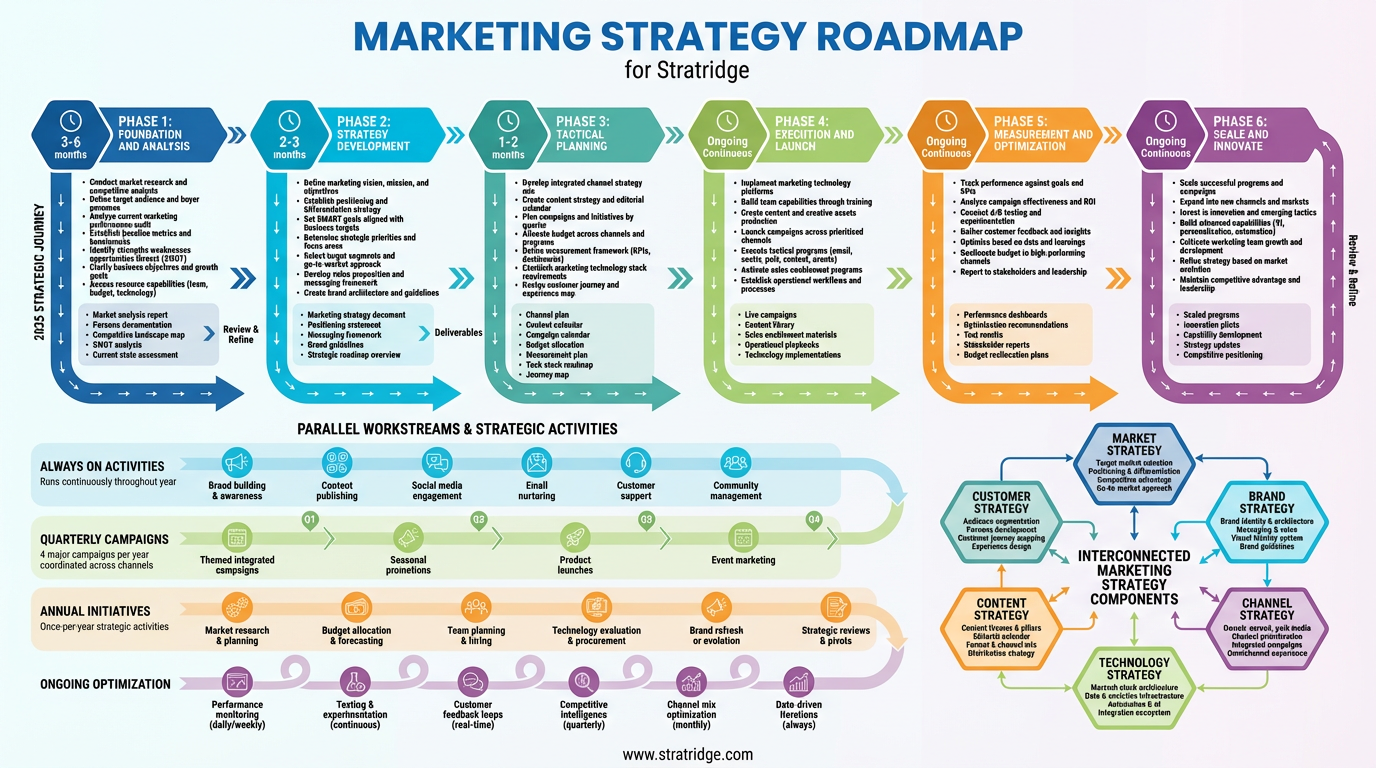
Recommended Meeting Structure:
Agendas should be distributed in advance, with pre-reading materials to maximize discussion time. Decisions should be documented, assigned owners, and followed up on in subsequent meetings. This structured approach ensures that the council remains a strategic asset rather than a time sink.
Preventing Positioning Drift: Mechanisms and Safeguards
Positioning drift is a subtle but insidious threat. It occurs when the core message slowly deviates from its intended path due to internal pressures, competitive responses, or evolving market conditions. A Positioning Council implements mechanisms to actively combat this drift, ensuring the company's narrative remains sharp and relevant.
One critical safeguard is the regular complete positioning audit framework. This comprehensive review, ideally conducted annually or semi-annually, assesses the current positioning against market realities, competitive moves, and internal alignment. The council reviews the audit findings and dictates necessary adjustments.
Another mechanism is the anatomy of a perfect positioning brief. The council can mandate the use of a standardized positioning brief for all major initiatives, ensuring that every project starts with a clear, approved understanding of the target audience, problem, solution, and differentiation. This brief acts as a blueprint, guiding creative and execution teams.
"Positioning is not what you do to a product. Positioning is what you do to the mind of the prospect."
Integrating with Strategic Context and Execution
The Positioning Council doesn't operate in a vacuum. Its decisions must be deeply integrated into the broader strategic context of the organization. This means aligning with overall business objectives, product roadmaps, and go-to-market strategies. The council's output should directly inform and influence these areas, ensuring a cohesive strategic direction.
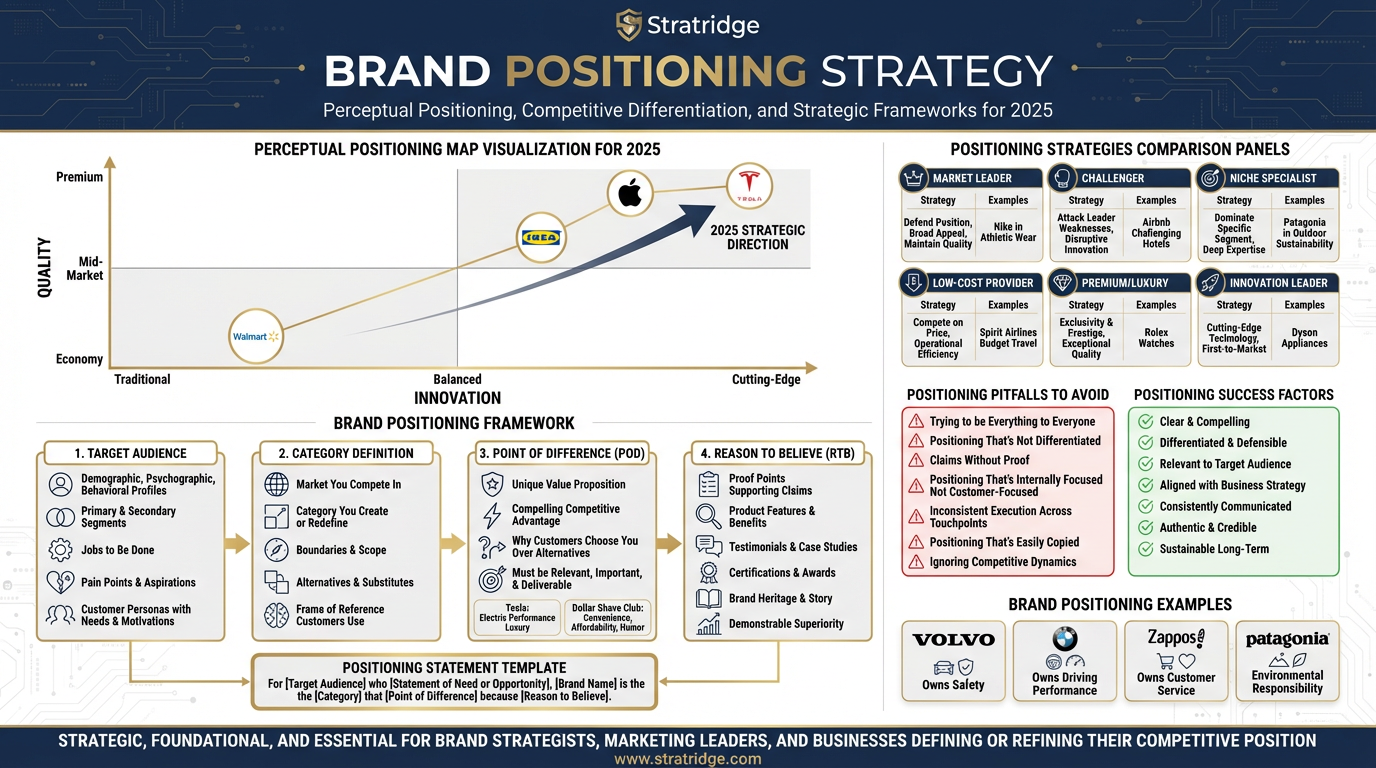
For instance, the council's work directly impacts how sales teams are enabled. A clear, consistent positioning message translates into more effective battle cards sales actually uses and compelling sales narratives. Similarly, product development can leverage positioning insights to prioritize features that reinforce the company's unique differentiation.
Ultimately, the Positioning Council serves as the strategic anchor for all market-facing activities. It ensures that every department, from product development to customer success, is rowing in the same direction, powered by a unified and compelling strategic narrative. This proactive governance prevents costly messaging inconsistencies and empowers the organization to capture and maintain its desired market position.
Establishing a Positioning Council is a proactive step towards organizational clarity and market leadership. It transforms the often-abstract concept of 'positioning' into a tangible, governed process. By leveraging Stratridge's intelligence platform, you can continuously monitor your market perception, analyze competitive moves, and ensure your council's decisions are data-driven, preventing drift and solidifying your strategic advantage.
Keep reading
The Complete Positioning Audit Framework (2026 Edition)
A repeatable audit for how clearly your positioning lands — the eight lenses, the scoring rubric, and the reason most internal audits confirm what leadership already wanted to hear.
The 90-Day Positioning Refresh Timeline
A realistic ninety-day plan for refreshing positioning without pausing the go-to-market engine. Thirteen weeks, four phases, what ships in each.
The Positioning Brief as a Living Document (Not a PDF)
A positioning brief saved as a PDF is a positioning brief that stopped evolving. The four infrastructure choices that keep the brief current, and the one convention that separates a reference document from a living one.
Positioning Audit
Find out exactly where your positioning is losing buyers.
Run an eight-area diagnostic of your site against your own strategic intent. Stratridge reads your pages, compares them to your positioning goals, and surfaces the specific gaps costing you deals — with a prioritized action plan.
- ✓Eight-lens diagnostic in under two minutes
- ✓Evidence pulled directly from your own site
- ✓Prioritized action plan, not a generic checklist