Affiliate Marketing Explained
Where affiliate programs still work in B2B — and the pitfalls that burn brand credibility for a marginal conversion lift.
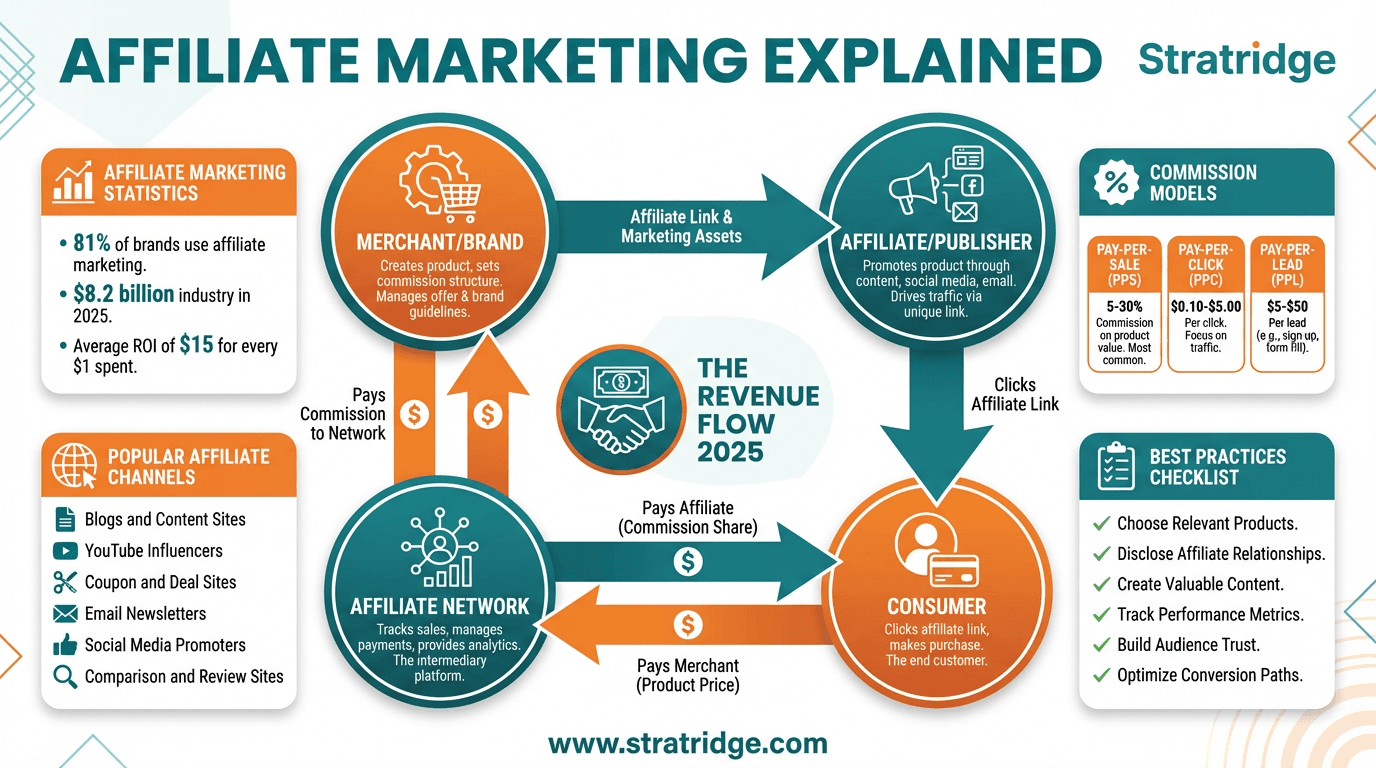
What this infographic is actually arguing.
Affiliate marketing has a sharper divide by segment than almost any other channel. In D2C and subscription consumer products, it's a mature, sometimes dominant channel. In B2B SaaS, it's a small category with specific use cases and a lot of failed attempts. This infographic covers where affiliate actually works in B2B, where it fails, and the pitfalls that wreck brand credibility for a marginal conversion lift.
Where it works. First: referral programs where the referrer is a customer, not a stranger. A customer earning a credit or a gift for referring another customer is an aligned incentive; the referrer's reputation is on the line so they send qualified leads. This works and compounds when the product is good.
Second: affiliate programs with niche professional creators — consultants, agencies, course creators — who have genuine audience trust in a specific domain. An agency that recommends your SaaS product to their client portfolio, with a revenue share, is producing real leads. The prerequisite is a product the affiliate is willing to vouch for publicly. If the product isn't good enough for an affiliate to recommend without the commission, no commission fixes it.
Third: review sites, partnership directories, and category marketplaces where listing and attribution are transparent. G2, Capterra, and similar sites operate on an affiliate model and work for buyers who prefer comparison shopping.
Where it fails in B2B. First: commission-chasing affiliate networks that push products to any audience for a cut. The leads are unqualified, the content is usually low-quality SEO rewrites of your own materials, and you end up competing with your own affiliates for branded search terms. Second: influencer-style affiliate partnerships dressed as editorial. Buyers spot the seams quickly, and trust erodes when the endorsement turns out to be a paid placement.
The pitfalls that damage brand. Affiliates bidding on your branded keywords in paid search (they buy your own traffic back and charge you for it). Affiliates running fake "review" sites that rank for "[your product] vs [competitor]" and push the reader toward whoever pays the higher commission. Coupon-code affiliates that intercept near-purchase intent and take credit for buyers who were already going to convert.
The operational hygiene that protects the program: a clear policy against branded search bidding, a vetted-affiliate list rather than an open network, and reporting that tracks incremental versus intercepted conversions separately.
Digital Channels
This infographic is free. The audit is too.
Paste your URL and Stratridge returns an audit graded against the six dimensions and twenty-four factors — so you see where the story on your site lines up with the story this infographic describes, and where it doesn't.